
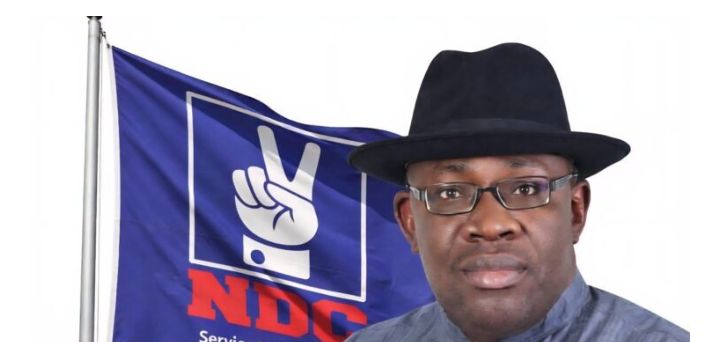
Former Bayelsa State Governor, Henry Seriake Dickson, has strongly defended the legitimacy of the National Democratic Coalition (NDC), dismissing criticisms by Umar Ardo as “misguided and sponsored propaganda.”
In a detailed statement, Dickson expressed disappointment at Ardo’s stance, describing him as a longtime friend and political ally whose recent actions he said reflect a lack of loyalty and respect.
Dickson clarified that the NDC’s registration process began as far back as 2017 but was stalled when the Independent National Electoral Commission (INEC), under Mahmood Yakubu, suspended the registration of new political parties.
He explained that the process was revived after the embargo was lifted, leading to the party’s eventual recognition.
According to him, INEC initially rejected the NDC’s application over its proposed logo, citing similarities with that of the All Progressives Congress (APC).
However, after failed attempts to resolve the issue administratively, the party sought legal redress.
Dickson said the court ruled in favour of the NDC, affirming its right to freedom of association and directing INEC to register the party, a directive he noted has since been fully implemented without appeal.
He stressed that INEC’s compliance with the court judgement and the expiration of the appeal window effectively put to rest any legal dispute over the party’s status.
“There is no existing legal challenge against the NDC,” he said, adding that no individual or group has the standing to contest its registration.
The former governor also revealed that INEC officials recently monitored the party’s National Executive Committee (NEC) meeting, where key decisions, including plans for congresses and primaries, were taken.
Addressing Ardo’s grievances, Dickson linked them to frustrations surrounding the non-registration of another political platform, noting that similar legal pathways were available to all aggrieved groups.
He added that other parties, such as the NDP, were also registered following court rulings, questioning why the NDC was being singled out.
Dickson warned that attempts to discredit the party were harmful to Nigeria’s opposition space, which he described as already under pressure.
He maintained that the NDC remains open to Nigerians seeking an alternative political platform, including politicians affected by recent developments in the country.
He expressed confidence in the party’s growing acceptance nationwide and in the diaspora, attributing criticism to concerns over its rising influence.
“The NDC has come to stay,” Dickson declared, urging supporters to remain steadfast as the party continues its mobilization efforts across the country.