
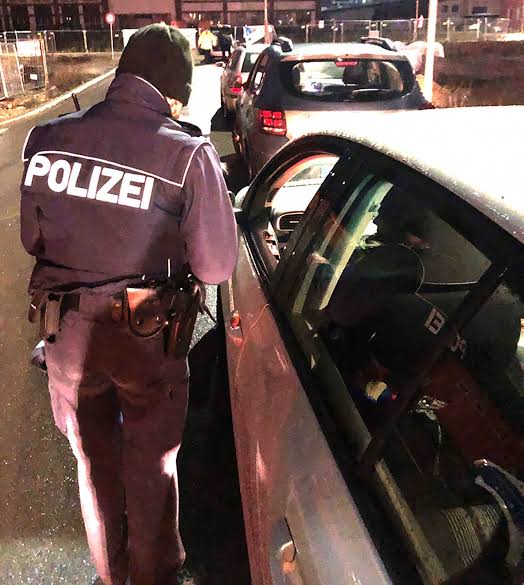
Late Monday night in Hesse, Germany, police arrested a driver who was speeding at up to 220 km/h (137 mph) on the A67 autobahn, prompting alarms from fellow motorists.
The incident began when an alert driver tracked the erratic Audi Q7 SUV—plated from abroad—while coordinating with authorities.
Officers finally intercepted the vehicle at a rest area near Weiterstadt. Breathalyzer tests revealed the driver had a staggering blood-alcohol concentration (BAC) of 4.16 g/L, far exceeding life-threatening levels, while the passenger recorded even higher than the device could measure (5 g/L).
The driver’s license was immediately revoked, blood samples were taken, and the driver was taken into custody.
Authorities described it as sheer luck that the high-speed, intoxicated behavior did not result in a fatal crash.
For context, Germany prohibits driving with a BAC of 0.5 g/L and criminalizes levels above 1.1 g/L . BAC levels above 4 g/L are considered acutely life-threatening and can lead to coma or death .
Alcohol-related driving contributes to a notable share of road fatalities. In 2020, alcohol was a factor in approximately 5.8% of fatal crashes, while speeding—often combined with drunk driving—led to 33.7% of fatal accidents .
Germany registered 2,719 road fatalities in 2020; despite overall safety improvements, motorways like autobahns remain high-risk due to high speeds and variable regulations .
In one recent high-profile case unrelated to alcohol, police nabbed a driver exceeding 320 kph (199 mph) on a Berlin-area autobahn.
That driver was fined €900, received a three-month driving ban, and lost two license points .
This latest arrest underscores a persistent safety issue: even a well-maintained autobahn can become deadly when combined with severe intoxication and reckless speeding.