
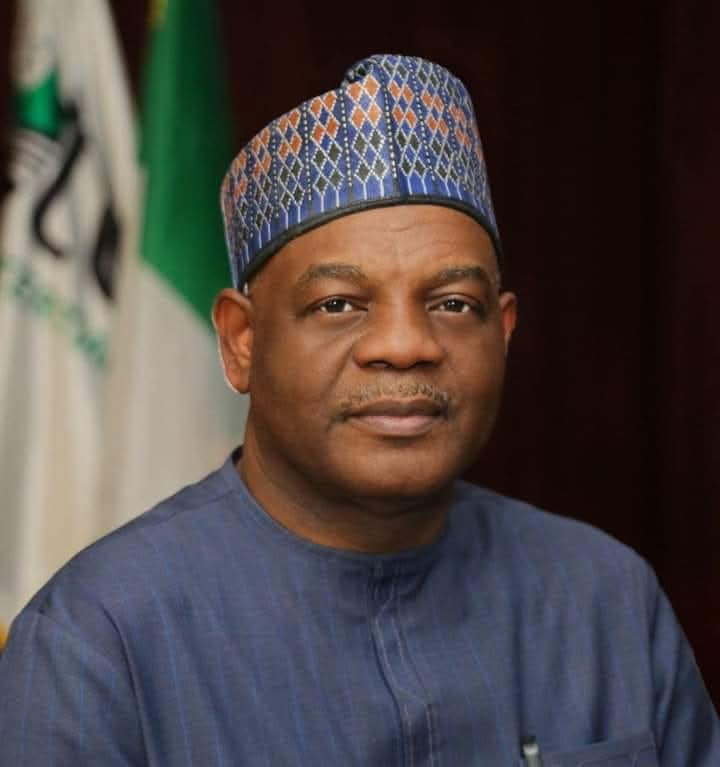
By Aaron Mike Odeh
When Architect Sunday Sylva Togo Echono assumed office as the Executive Secretary of the Tertiary Education Trust Fund (TETFund) in March 2022, the mood around Nigeria’s tertiary education sector was cautious, even weary. Public universities were groaning under infrastructural decay, research output had dipped, scholarship schemes were riddled with inefficiencies, and the narrative of “underfunded, overstretched and underperforming” had become a tiresome chorus.
Today, that narrative is shifting—rapidly and decisively. Under Echono’s strategic, reform-driven leadership, TETFund has undergone one of the most ambitious transformations in its history, repositioning itself from a mere disbursement entity into a development powerhouse shaping the future of Nigerian knowledge production.
This is the story of achievements so far-reaching and structural that observers describe them as earthshaking.
A New Vision: From Building Projects to Building Minds
Before Echono, TETFund was widely associated with physical structures—lecture halls, hostels, studios and laboratories. While these remain indispensable, Echono introduced a bold shift: education development must be driven by intellectual capacity as much as infrastructural expansion.
His philosophy emphasizes:
Strategic, outcome-based funding, not routine allocations
Human capital development, not just capital projects
Research competitiveness, not academic isolation
International partnerships, not local limitations
This shift has transformed TETFund from a bank-like funding institution into a strategic national development agency.
Institutional Re-engineering: A TETFund That Works
One of Echono’s earliest moves was to overhaul internal systems for efficiency, transparency and accountability.
Under his direction, the Fund introduced stronger procurement checks, digital monitoring systems, tighter project-tracking frameworks, and more predictable disbursement schedules. Perhaps equally significant was the cultural shift: TETFund staff were re-oriented to adopt service-centric mindsets and delivery benchmarks.
The results became visible quickly:
Delays in project releases reduced
Universities began receiving allocations with clearer timelines
Administrative leakages reduced
Reporting systems improved
For many vice-chancellors, rectors and provosts, the Echono era marked the first time TETFund operations resembled the discipline of a development agency.
Deepening Research Capacity: Raising the Knowledge Economy
No reform under Echono has been more transformative than his aggressive push for research development. He recognized that Nigeria’s climb into global competitiveness depends on research output, innovation, and knowledge production.
Key interventions under his leadership include:
Expansion of the National Research Fund (NRF)
Establishment of sector-driven R&D clusters
Strengthening of institutional research directorates
Support for science, technology, engineering and mathematics (STEM) innovation projects
Enhanced supervision and funding compliance mechanisms
Echono championed a vision in which Nigerian universities become hubs of solution-driven research, contributing directly to national development—agriculture, security, manufacturing, health innovation and digital technology.
TETFund Goes Global: Partnerships That Expand Nigeria’s Academic Frontier
A major highlight of Echono’s tenure is the unprecedented internationalization of TETFund’s work.
Through strategic collaborations with top global universities, research institutes and international development partners, TETFund now offers:
Foreign postgraduate scholarships
Joint research programs
Academic exchanges
Capacity-building for lecturers
New pathways for local institutions to gain global relevance
These partnerships have placed Nigerian scholars in leading institutions in Asia, Europe, the Americas and Africa. Echono’s foreign engagement roadmap is deliberate: global exposure, graduate return, local application, and national impact.
Even when some scholars defaulted and absconded abroad, Echono confronted the issue head-on, not as a scandal but as a governance challenge requiring firmer structures. His transparent approach earned respect across sectors.
Rebuilding Human Capacity: The Heart of TETFund’s New Mandate
If buildings symbolized TETFund’s early years, people symbolize Echono’s tenure. His administration massively expanded academic training and staff development initiatives. Thousands of lecturers have benefitted from:
Overseas Master’s and PhD sponsorships
Local postgraduate scholarships
Academic conferences
Workshops and professional certification trainings
ICT advancement programs
Echono understands a crucial truth: no educational system can outgrow the quality of its teachers. His strategic investments in human capital are helping rebuild a once-depleted academic workforce.
Tackling Systemic Challenges With Unusual Candour
Unlike many public officials who sidestep uncomfortable issues, Echono has displayed a rare openness. He has openly acknowledged challenges such as:
scholars absconding abroad,
project delays in certain institutions,
funding sufficiency constraints, and
bureaucratic bottlenecks.
He treats these not as embarrassments but as opportunities for reform—introducing tracking systems, stronger monitoring units and stricter compliance frameworks.
This transparency has boosted public trust and positioned TETFund as one of Nigeria’s more accountable agencies.
Stakeholder Recognition: A Leadership Marked by Results
Across academia, the media, civil society and professional bodies, Echono has earned wide commendation. Awards and institutional recognitions consistently highlight:
his visionary leadership,
his structural reforms,
his procurement discipline,
his investment in research and human capacity, and
his commitment to transparency.
For many educational stakeholders, the Echono era represents a watershed—the return of purpose, credibility and direction to tertiary education intervention.
Visible Impact on Campuses: Where It Matters Most
Beyond policy speeches and administrative reforms, the most powerful evidence of Echono’s achievements lies on campuses nationwide.
Under his stewardship:
Abandoned projects have been revived
Research laboratories have been equipped
ICT infrastructures have been upgraded
Lecture halls and hostels have been completed
Academic staff motivation has increased
Research grants are more accessible
Scholarship systems run more efficiently
For students, lecturers and institutions, these improvements translate into better learning environments, stronger research ecosystems and greater academic opportunities.
A Balanced Lens: Achievements and the Road Ahead
Even with remarkable milestones, Echono readily acknowledges that reforming Nigeria’s tertiary sector is a marathon, not a sprint. The challenges ahead include:
Sustaining funding stability
Ensuring trained scholars return and serve
Expanding industry-academia partnerships
Securing greater autonomy for institutions
Deepening digital transformation
Yet his administration has laid a strong foundation—arguably one of the strongest since TETFund’s creation.
Conclusion: A Legacy Taking Shape
Architect Sonny Togo Echono’s leadership represents one of the most structurally significant moments in TETFund’s history. His bold reforms, global partnerships, research-driven strategies, and people-centric interventions have not only strengthened the agency but redefined its purpose.
What is unfolding under his leadership is more than administration; it is a legacy of transformation—one that may shape Nigeria’s tertiary education landscape for generations.
As TETFund evolves into a true national development catalyst, Echono’s earthshaking achievements stand as proof that visionary leadership, disciplined execution and unwavering commitment can breathe new life into a sector once dismissed as stagnant.
Aaron Mike Odeh, A Public Affairs Analyst, Media Consultant and Community Development Advocator, Write from Post Army Housing Estate Kurudu Abuja