
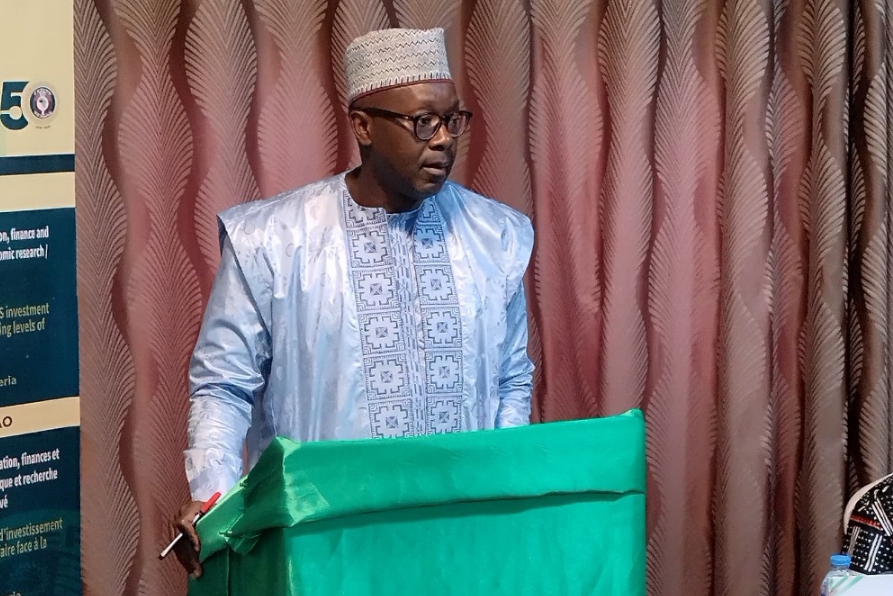
Monrovia, Liberia – Nyonblee Karnga-Lawrence, the President Pro Tempore of the Liberian Senate, has stated that the ECOWAS Investment Policy (EIP) offers “both a vision and a pathway toward inclusive economic growth” through improved investment climates, enhanced human capital, and greater private sector participation.
She made this disclosure while delivering her goodwill message at the localised sitting of the ECOWAS Parliament’s Joint Committee on Administration, Finance, Budget, Macroeconomic Policy and Economic Research, Public Accounts, Industry and Private Sector in Monrovia, the capital of Liberia.
She said the meeting’s theme, “Assessing the effectiveness of ECOWAS investment policy as an instrument for addressing the rising levels of unemployment in the sub-region,” was apt as it “touches the very core of the regional challenges.”
Senator Karnga-Lawrence noted that by addressing unemployment, the economic bloc is not only investing in its economies but also “investing in peace, dignity, and the future of its young people.”
“With youth unemployment in West Africa reaching some of the highest levels globally, this gathering presents a crucial platform to examine the gaps in our investment frameworks, and more importantly, to align strategies that can meaningfully address joblessness, poverty, and migration pressures,” she stated.
“I am confident that this Joint Committee Meeting will produce actionable insights and pave the way for a more effective implementation of the ECOWAS Investment Policy. Let us seize this opportunity to strengthen synergies between national and regional institutions, foster meaningful public-private dialogue, and promote inclusive economic policies that leave no one behind. As you gather here to deliberate on how to make investment a powerful tool for job creation, let us also remain mindful of the broader vision of a stable, prosperous, and secure West Africa as economic growth and peace are intertwined.”
She highlighted that the Liberian government, with active legislative support, has embarked on reforms to attract both domestic and foreign investment. “We have prioritised legal frameworks that enhance transparency, reduce bureaucratic hurdles, and encourage innovation,” she said.
She added that “The Legislature is currently reviewing bills that aim to bolster the private sector, particularly Small and Medium Enterprises (SMEs), recognizing their vital role in employment generation. We are also pushing for increased budgetary support for technical and vocational education to better equip our youth for the demands of the labour market.”
Senator Karnga-Lawrence proudly noted Liberia’s recent election to the United Nations Security Council as a non-permanent member for the 2026–2027 term. “This is not merely a diplomatic achievement for Liberia; it is a shared victory for the ECOWAS region,” she asserted.
“Our election represents a reaffirmation of Liberia’s transformation from a nation once in conflict to a respected voice for peace and stability. At the Security Council, Liberia will serve as a bridge between global security frameworks and the regional realities of West Africa. We will advocate for stronger international responses to security challenges affecting our sub-region, including terrorism, violent extremism, and political instability. Our presence on the Council will further elevate the ECOWAS perspective on issues of peacebuilding, youth empowerment, and post-conflict reconstruction,” she added.
The President of Liberia’s Senate also used the occasion to commend the Speaker of the ECOWAS Parliament, Right Hon. Hadja Memounatou Ibrahima, for her “exemplary leadership and unwavering commitment to the principles of regional stability and good governance.”
“We also extend our thanks to Madam Speaker and all Honourable Members of the ECOWAS Parliament for the critical role you played in supporting the resolution of the recent political impasse in the Liberian House of Representatives. Your engagement and guidance were not only timely but also deeply reflective of the values of dialogue, mutual respect, and democratic consolidation that underpin the ECOWAS Parliament,” she concluded.