
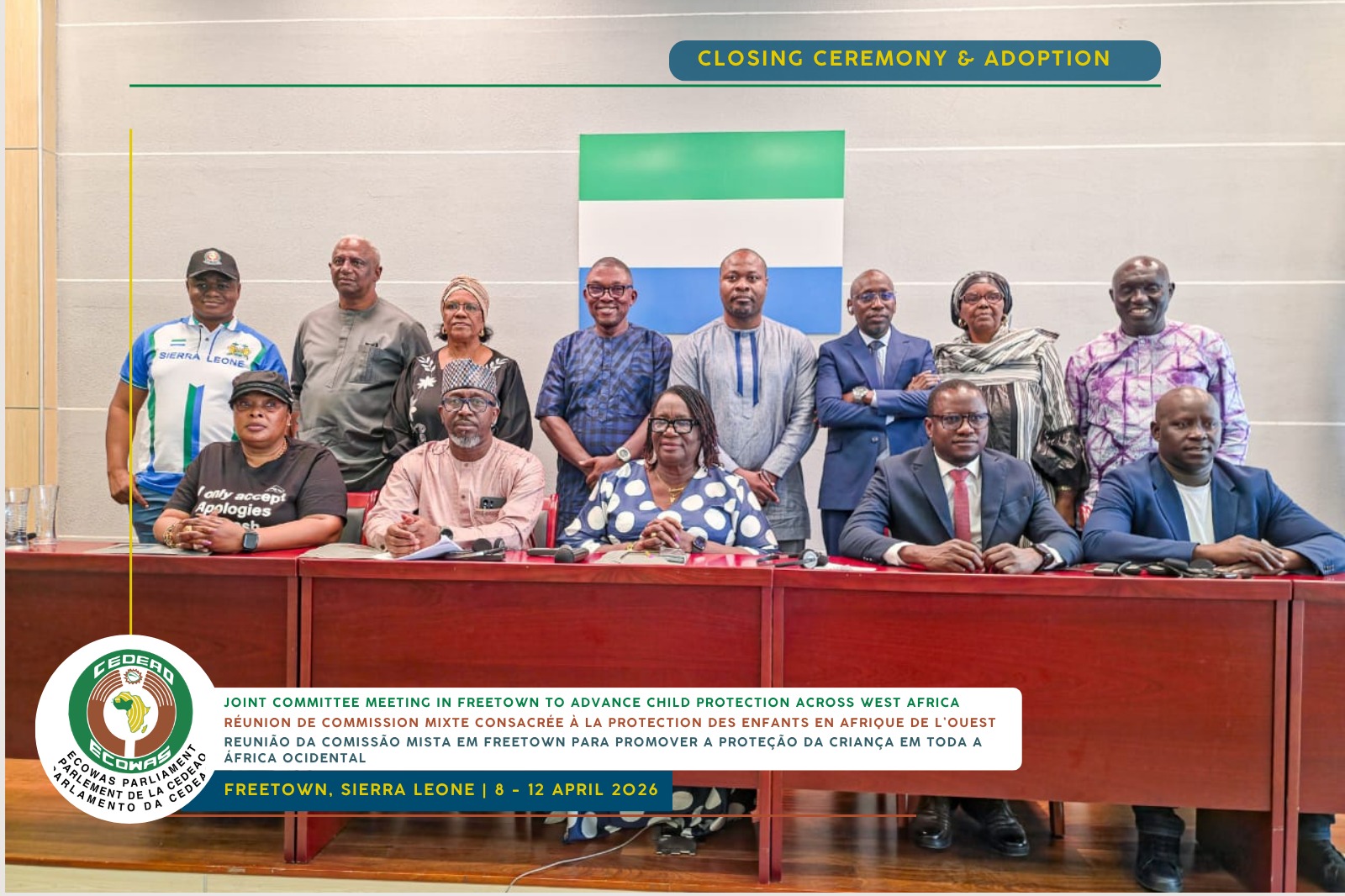
– ECOWAS Parliament adopts measures to protect children in street situations
– Member States urged to adopt well-funded national strategies
– Regional framework needed to address cross-border child vulnerability
– Data-driven decision-making and synchronized data collection systems recommended
– ECOWAS Commission to establish cross-border protection and referral systems
– Parliamentary Resolution on children in street situations to be pushed
The Joint Committee of the ECOWAS Parliament has adopted a set of strategic and actionable measures to strengthen the protection of children in street situations and combat child exploitation across West Africa. This move is aimed at addressing the growing issue of child vulnerability in the region, where economic insecurity, rapid urbanisation, displacement, and recurring humanitarian crises have contributed to a significant increase in the number of children living or working on the streets.
According to the ECOWAS Parliament, the meeting, held from 7-11 April 2026, brought together parliamentarians, government officials, ECOWAS institutions, and civil society actors to discuss ways to bridge implementation gaps, strengthen frontline services, improve inter-agency coordination, and reinforce accountability mechanisms across Member States.
“We must move beyond policy frameworks to concrete implementation, supported by clear targets and adequate financing,” emphasized the Joint Committee, highlighting the need for immediate action to address the persistent challenges, including weak enforcement of existing laws and limited institutional capacity.
The Joint Committee called on Member States to adopt and operationalize dedicated, well-funded national strategies on children in street situations, ensuring access to essential services such as education, healthcare, legal identity, and child-friendly justice.
The committee also prioritized addressing the root causes of the phenomenon, including poverty and lack of social protection, and urged Member States to expand social protection programmes, strengthen family support systems, and implement poverty reduction measures to prevent child vulnerability.
Recognizing the cross-border nature of child vulnerability, the Joint Committee underscored the need for a harmonized regional framework, stressing the importance of data-driven decision-making and calling for synchronized definitions, improved data collection, and stronger case management systems to ensure continuity of care for children on the move.
“A harmonized regional framework is essential to address the cross-border nature of child vulnerability,” said the Joint Committee.
To support these efforts, the ECOWAS Commission has been urged to establish cross-border protection and referral systems, develop safe repatriation and reintegration protocols, and strengthen regional data-sharing mechanisms. The ECOWAS Child Rights Information Management System (ECRIMS) was lauded as a key tool for enhancing transparency, tracking interventions, and supporting evidence-based policymaking across the region.
The meeting concluded with a commitment to translate policy into measurable action, recognizing the protection of vulnerable children as both a moral obligation and a strategic investment in the region’s stability and development.
The Joint Committee reaffirmed its commitment to stronger legislative action, oversight, and advocacy, indicating its intention to push for the adoption of a Parliamentary Resolution on children in street situations, aimed at strengthening Member States’ monitoring of national and regional child protection frameworks.