
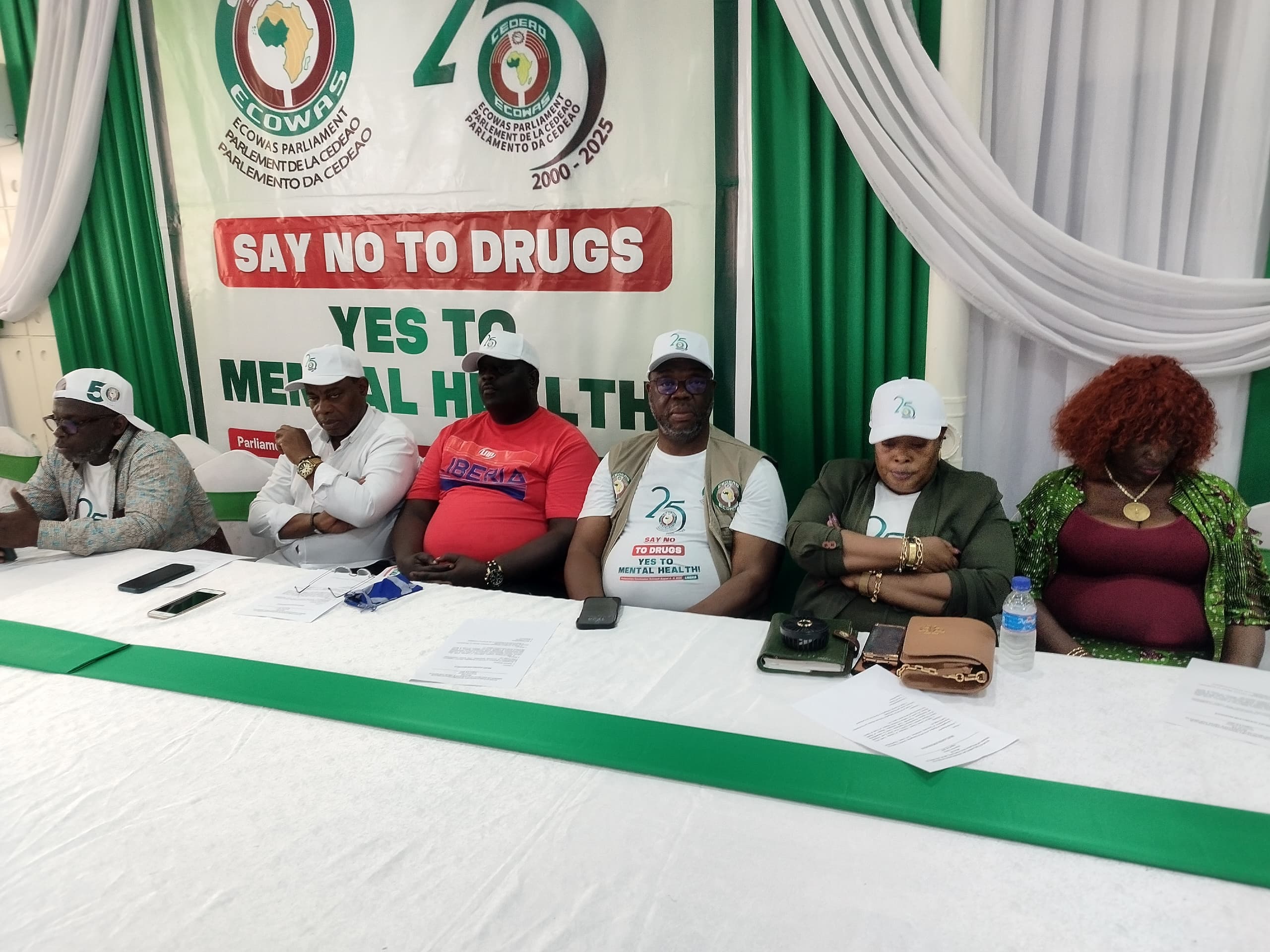
The ECOWAS Parliament’s recent declaration of war on drug and substance abuse in West Africa is a commendable effort to tackle the escalating challenges posed by substance abuse and mental health disorders in the region. The awareness campaign, which has taken place in Conakry, Guinea, Freetown, Sierra Leone, and Monrovia, Liberia, aims to alert stakeholders to the growing concerns over substance abuse and mental health issues.
The statistics are alarming. Between 2020 and 2022, authorities seized significant quantities of illicit drugs, including 139 tons of cannabis in 2020, 631 tons in 2021, and 892 tons in 2022. The West African Epidemiology Network on Drug Use (WENDU) report shows that 55% of all admissions for drug abuse treatment from 2020 to 2022 were linked to cannabis use. Cocaine addiction is also on the rise, with more than 60% of people seeking treatment in Senegal and nearly 80% in Côte d’Ivoire addicted to cocaine or crack.
In addition to cannabis and cocaine, other types of drug abuse are also prevalent in West Africa. Inhalant abuse, including sniffing or inhaling substances like glue or paint thinner, is a concern. Prescription medication misuse is also a significant issue, with many people taking medications without a valid prescription or in ways not intended by the prescriber.
Opioid abuse is another major concern, with many people addicted to heroin and prescription painkillers. Amphetamine abuse is also a problem, with many people misusing prescription medications like Adderall and Ritalin. Synthetic drug abuse, including the use of substances like Spice and bath salts, is also a concern.
The economic implications of the drug crisis are significant. Substance abuse can lead to reduced productivity, increased healthcare costs, and lost income. Illicit drug trafficking fuels organized crime, including terrorism, kidnappings, arms trafficking, and prostitution. The socio-economic consequences of substance abuse are far-reaching, with mental health issues, social isolation, family breakdown, and economic hardship being some of the devastating impacts.
Poverty and substance abuse are closely linked in West Africa, with many young people turning to substance abuse as a coping mechanism for poverty and lack of opportunities. The ECOWAS Parliament’s campaign prioritizes support for youth and vulnerable populations, who are disproportionately affected by substance abuse and mental health issues.
The ECOWAS Parliament’s declaration marks an important step towards addressing this critical issue. By adopting a comprehensive approach and allocating more resources to treatment and prevention programs, West African countries can reduce the devastating impact of substance abuse and promote a healthier, more prosperous future for their citizens.
The region is working to strengthen regional coordination, enhance support systems, education, and treatment infrastructure throughout the region. A uniform regional cannabis policy is being developed to address the region’s cultural, social, and economic realities. Efforts are also being made to improve data collection and research on drug and substance abuse.
The ECOWAS Parliament’s campaign is a timely response to the growing concerns over substance abuse and mental health issues in the region. It is hoped that this initiative will lead to meaningful action and positive change in the region. Relevant stakeholders at regional and global levels should support ECOWAS Parliament’s efforts to combat the menace of drug abuse. This effort certainly needs the commendation and support of all. Such support will serve as a springboard for the ECOWAS Parliament to do more and further amplify its impact in the region.
By working together, West African countries can develop effective strategies to combat substance abuse and promote a healthier, more prosperous future for their citizens. The ECOWAS Parliament’s declaration of war on drug and substance abuse is a significant step towards addressing this critical issue, and it is hoped that it will lead to meaningful action and positive change in the region.