
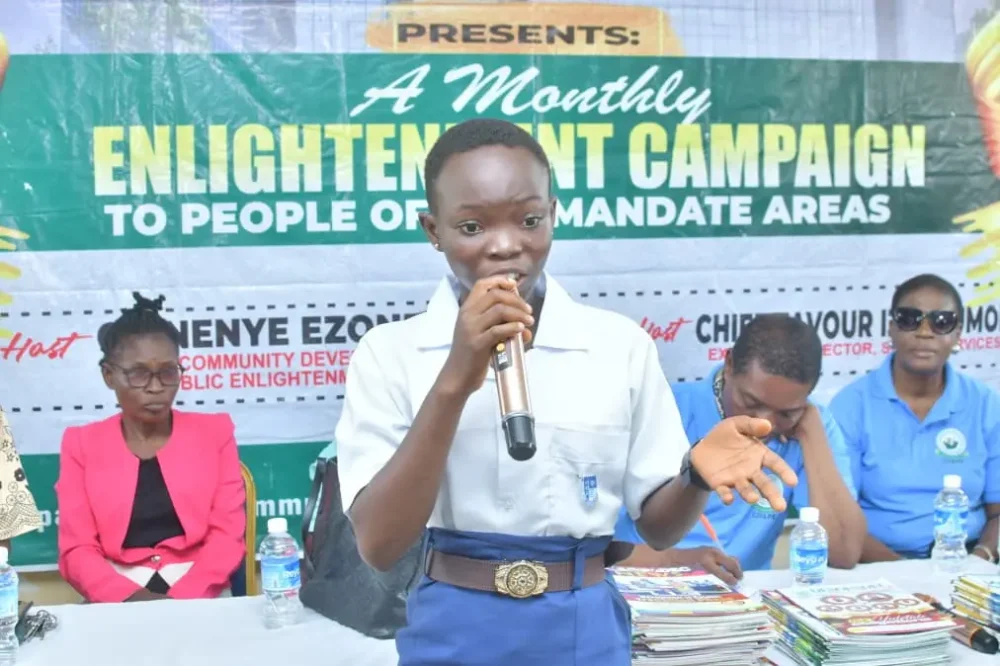
The Delta State Oil Producing Areas Development Commission (DESOPADEC) has cautioned students across the state against the rising but misleading claim that “school is a scam,” emphasizing that education remains a cornerstone for personal growth and societal advancement.
The warning came during an outreach program at Orogun Grammar School in Orogun, Ughelli North Local Government Area, part of DESOPADEC’s ongoing youth reorientation initiative.
Speaking on behalf of the Head of the Department of Community Development and Public Enlightenment, Mrs. Etume Okeoghene highlighted the dangers of the “school is a scam” narrative, describing it as a threat that could derail young people’s future prospects. She stressed that the Commission is committed to combating negative ideologies and guiding youths toward productive and meaningful pursuits.
“Education equips individuals with structure, discipline, and opportunities. No society can achieve lasting development without an educated population,” she noted.
A key feature of the program was a debate where students discussed both sides of the controversial statement. The exercise not only encouraged critical thinking but also reinforced the Commission’s message that neglecting formal education could have serious consequences for individuals and their communities. Outstanding participants were rewarded with gift items to recognize academic excellence.
Speakers at the event also advised students to avoid drug abuse, cultism, prostitution, internet fraud, and other social vices, warning that these destructive paths are often fueled by the mistaken belief that formal education is irrelevant. They urged students to focus on their studies and personal development, noting that shortcuts to success often result in long-term setbacks.
The outreach is part of DESOPADEC’s wider strategy to promote education, reduce youth restiveness, and strengthen human capital development in Delta’s oil-producing communities. School authorities expressed appreciation for DESOPADEC’s visit, acknowledging the potential positive impact of the campaign on students’ attitudes toward learning.