
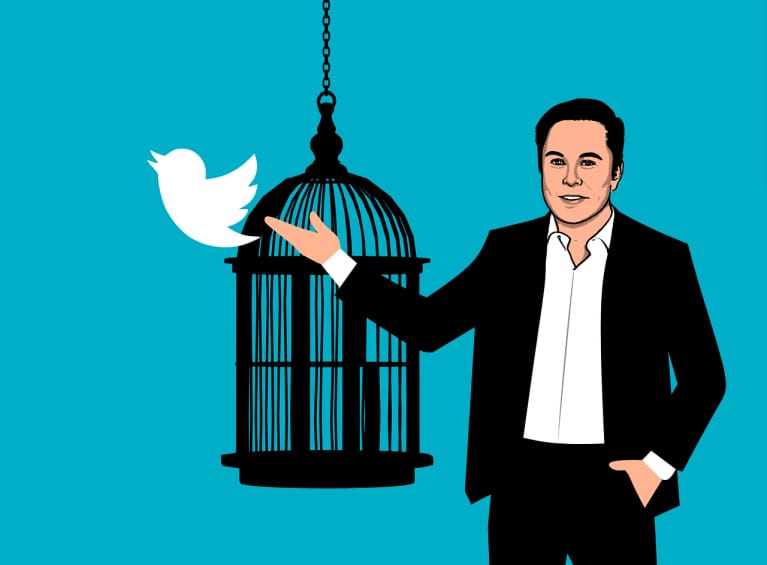
In a surprise move, billionaire entrepreneur Elon Musk announced on Monday that he has acquired Stanford University, one of the world’s leading research institutions, for a staggering $139 billion. The university, located in California’s Silicon Valley, will be renamed “X, formerly known as Leland Stanford Junior University” (X-fka-LSJU).
Musk, who is also the CEO of SpaceX, Tesla, Neuralink, and The Boring Company, among others, stated that his vision for X-fka-LSJU is to revolutionize education and make it more efficient. He plans to achieve this by leveraging technology, such as artificial intelligence and autonomous systems.
“I’m excited to bring my expertise in innovation and disruption to the world of education,” Musk said in a statement. “X-fka-LSJU will be a hub for cutting-edge research and development, and will produce the next generation of leaders in tech and beyond.”
Musk’s plans for X-fka-LSJU include devoting the School of Engineering faculty to developing autonomous USB drives that can insert themselves into people’s computers and necks to distribute information more efficiently. He also plans to rename the E-Quad to the Elon-Quad and put up statues of himself around the campus.
The acquisition has raised concerns among Stanford professors and students, who are worried about the impact on academic freedom and the university’s reputation. “This is a dark day for Stanford,” said one professor, who wished to remain anonymous. “Musk’s track record of suppressing dissent and free speech on Twitter is alarming, and we fear for the future of our institution.”
However, outgoing Stanford President Jonathan Levin seemed more optimistic about the deal. “I’m looking forward to seeing the impact of Musk’s vision on our campus,” he said. “And, of course, I’m grateful for the 5% of Tesla shares he offered me.”
Musk’s acquisition of Stanford University is the latest in a string of high-profile deals, including his purchase of Twitter for $44 billion in 2022. The move has left many in the academic community stunned, with some questioning Musk’s motives and others worrying about the implications for the future of higher education.