
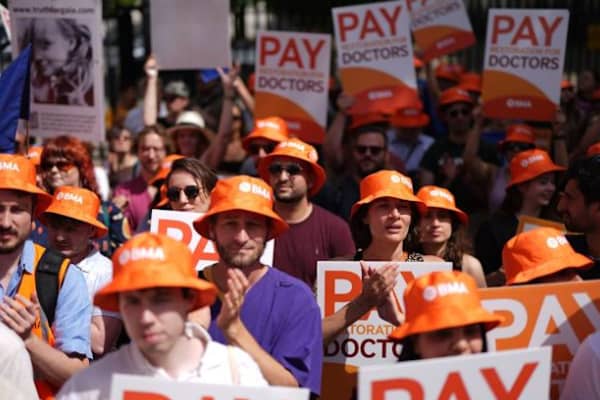
Up to 50,000 resident doctors across England have started a five‑day strike from July 25 to July 30, after negotiations with the government over pay collapsed.
These early‑career doctors, who play a central role in hospitals, are demanding a pay rise to undo what they describe as nearly two decades of pay erosion since 2008.
The British Medical Association is calling for roughly a 29% increase, arguing that current pay still falls well below inflation-adjusted 2008 levels.
Although the government granted a 22% increase over two years and a 5.4% rise this year, doctors say their earnings remain significantly behind and the pace of recovery is too slow.
While hospitals have prepared for the walkout, emergency departments will remain open and efforts will be made to maintain urgent care and essential appointments.
Patients have been urged to seek medical help for serious conditions via NHS 111, GPs, or pharmacies.
The government has stated that doctors have received an average 28.9% salary uplift through previous deals and will not agree to further pay hikes this year.
Health Secretary Wes Streeting described the strike as unnecessary and unaffordable.
Prime Minister Keir Starmer made a public appeal for doctors to return to work, warning of setbacks to the NHS recovery and delays in care for patients.
He said most people do not support the strike and that the disruption could harm long-term patient health.
In Manchester, striking doctors rallied outside hospitals, citing more than 20% pay loss since 2008 and that many face high student debt despite earning around £18.60 per hour.
They say the government has failed to follow through on earlier promises of gradually restoring pay.
Public backing for the strikes has fallen, with support falling to around 26% in recent polls.
The dispute now poses risks to Labour’s NHS reforms and its commitment to reduce waiting lists, while both sides remain firmly opposed.