
By Abasi Ita
The Federal Government has officially scrapped the national policy that made indigenous languages the compulsory medium of instruction in Nigerian schools.
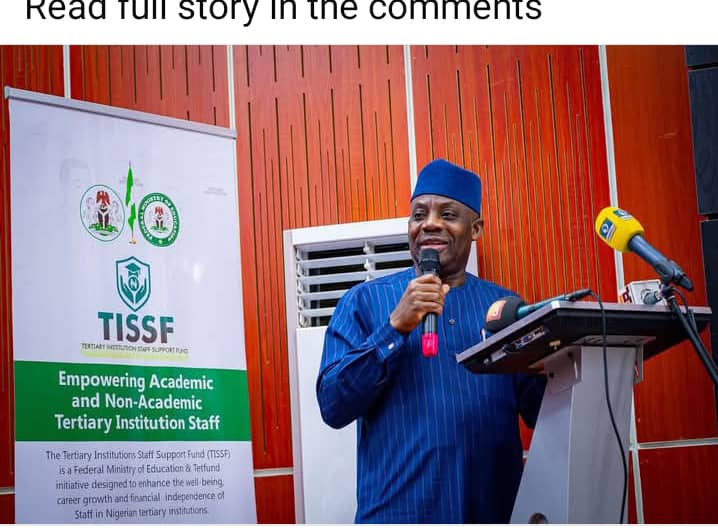
Minister of Education, Dr. Tunji Alausa, announced the decision on Wednesday during the 2025 Language in Education International Conference organised by the British Council in Abuja.
According to the minister, the reversal was approved at the 69th meeting of the National Council on Education held in Akure, Ondo State, between November 3 and 7.
The policy, introduced in 2022 as the National Language Policy, had directed that children from early childhood through Primary Six be taught in their mother tongue or the dominant language of their community. It was designed to promote indigenous languages, enhance early learning, and preserve Nigeria’s linguistic diversity.
However, Alausa explained that recent performance data revealed widespread academic failure in areas where the mother-tongue policy was most implemented.
“We have seen a high failure rate in WAEC, NECO, and JAMB in certain regions that adopted the mother tongue excessively. This decision is based on evidence, not emotion,” he said.
The minister declared that English will henceforth serve as the language of instruction at all levels of education — from pre-primary to tertiary.
“Using mother-tongue instruction over the past 15 years has, in some cases, undermined educational outcomes. English now stands as the medium of instruction across all levels of schooling,” Alausa stated.
He added that data showed students primarily taught in indigenous languages struggled with English comprehension and performed poorly in national examinations.
Alausa urged education stakeholders with contrary opinions to provide verifiable data to support their positions, emphasising that the government remains open to evidence-based dialogue to improve the education system.
He also commended the British Council for its support in promoting inclusive language and learning policies in Nigeria.
In her remarks, Minister of State for Education, Prof. Suwaiba Ahmed, said the government is developing new teacher training programmes focused on literacy and numeracy for early grade teachers.
“We are designing training packages for teachers handling pre-primary and lower primary classes to equip them with the best methods for teaching literacy, numeracy, and effective classroom learning,” she explained.
The British Council Country Director, Donna McGowan, reaffirmed the organisation’s commitment to supporting Nigeria’s education reforms.
“We are proud to work closely with the Ministry of Education in strengthening teacher professional development, school leadership, and language proficiency,” she said.
The cancellation marks a major shift in Nigeria’s education policy, steering the country back toward English-language instruction as the foundation of classroom learning.