
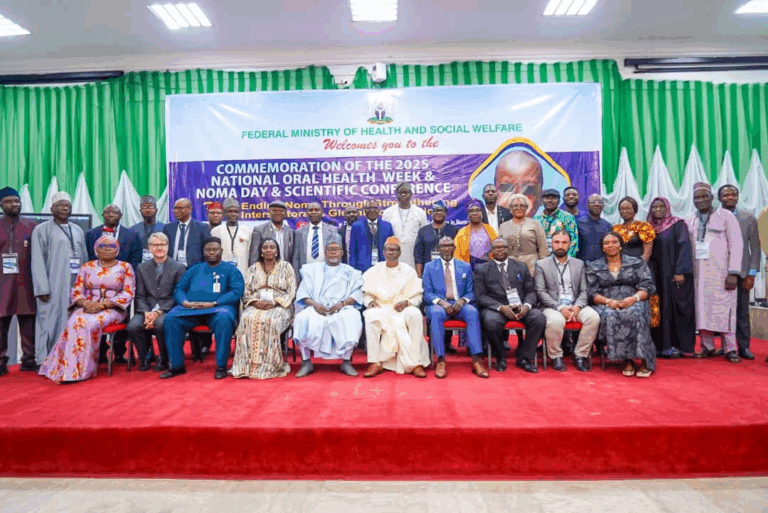
The federal government has reaffirmed its commitment to expanding access to oral health services, focusing on vulnerable populations by increasing funding levels and strengthening essential programmes designed to improve nationwide oral health outcomes.
Deputy health minister Iziaq Salako highlighted these plans during the 2025 National Oral Health Week and Noma Awareness Day on Tuesday, emphasising the administration’s dedication to tackling preventable oral diseases.
He explained that additional resources would be channelled through the restructured Basic Health Care Provision Fund, enabling enhanced service delivery, facility upgrades and equitable distribution of oral health interventions across primary healthcare centres.
Mr Salako noted the government’s intention to integrate oral health into PHC so that facilities could provide hygiene education, counselling, diagnostics, fluoride treatments, restorative services, and timely referrals, all essential for improving overall community oral health.
He stressed that community health workers and traditional birth attendants were receiving training to identify and refer to oral conditions early, supporting national goals to reduce preventable suffering and increase survival among disadvantaged populations.
The minister described noma as a gangrenous infection affecting malnourished children in poor communities, insisting the disease was both preventable and treatable when early detection, improved hygiene and adequate nutrition were consistently ensured.
Nigeria, he said, was partnering with global organisations to strengthen surveillance, improve early diagnosis and expand treatment, while also emphasising investments in nutrition, sanitation, housing, immunisation and maternal health as essential preventive measures.
Mathis Winkler, chairman of NOMA Aid Nigeria Initiative, stated that Nigeria bore Africa’s highest noma burden, explaining the organisation’s continued investment in treatment, prevention, community support and close collaboration with government agencies.
Charles Ononiwu, country director of NANI, reported that their treatment centre in Abuja had completed 237 free noma surgeries since 2023, covering transportation, medication, feeding and support services for extremely poor patients requiring comprehensive reconstructive care.
Médecins Sans Frontières country representative, Ahmed Aldikhari, said MSF had provided reconstructive surgeries, physiotherapy, nutrition and mental health services since 2014, completing more than 1,600 surgeries nationwide and supporting noma’s recognition as an NTD.
Amos Magaji confirmed that legislative efforts were underway to establish policies for noma prevention and treatment, strengthen neglected tropical disease regulation, and expand specialised centres, ensuring that no child suffered avoidable deformity or preventable loss.
(NAN)