
By Ngozi Nwankwo
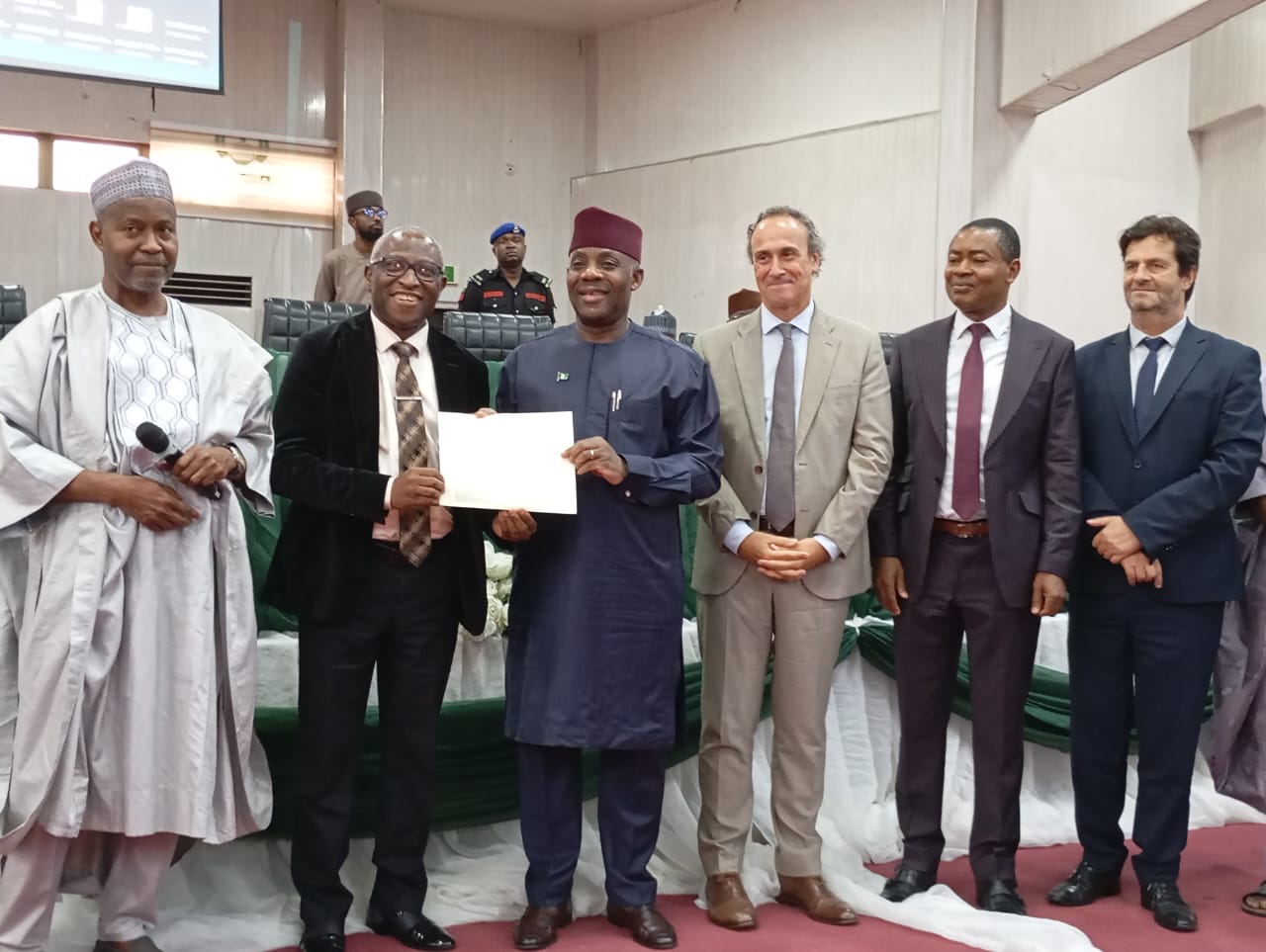
The Federal Government on Tuesday unveiled a forty million-dollar Blueprint ICT Development (Blueprint-ICT-Dev) Project in 10 Nigerian universities.
The project aimed at digitising and transforming tertiary education in Nigeria is funded by the French Development Agency,FDA.
During the unveiling of the project in Abuja, the Minister of Education, Dr Tunji Alausa, said the project underscored a renewed national commitment to human capital development, digital transformation, and inclusive education.
“This project is a strategic investment in the future of Nigerian education. It’s about building smart campuses, empowering smart people, and nurturing smart ideas,” Alausa said.
The Minister said the project aligns with President Bola Tinubu’s Renewed Hope Agenda and would serve as a model for innovation and international cooperation.
According to him, the project is designed to help universities digitise administrative systems, develop hybrid and cross-border academic programmes, and strengthen transnational education linkages.
He explained that it would also support digital libraries, enhance research management systems, and integrate all participating institutions into the Nigerian Research and Education Network,NgREN.
Alausa said the initiative would promote teacher training, improve education data systems, and integrate Technical and Vocational Education and Training,TVET, across university curricula to support skills-based learning.
The Executive Secretary, National Universities Commission,NUC, Prof. Abdullahi Ribadu, said the project signalled the Nigerian University System’s readiness to embrace digital transformation as a driver of academic excellence.
Ribadu stated that the project, which evolved from the NUC’s 2018 blueprint for revitalising Nigerian universities, would be implemented across Nigeria’s six geopolitical zones.
He noted that the blueprint identified challenges in governance, financing, and employability, and recognised ICT an important tool for reform.
“With this privilege comes responsibility. Success will be measured not just by infrastructure but by the lives transformed,” he said.
He added that the project would expand university reach into underserved communities through open and distance learning, digital literacy outreach, and teacher empowerment initiatives.
“This is not just about infrastructure or platforms. It is about reimagining the role of ICT in higher education,” Ribadu said.
He urged universities, both within and outside the pilot phase, to begin automating key processes, including student and staff data management, academic records, and governance systems.
Also speaking, Dr Joshua Atah, Coordinator of Special Projects at the NUC, outlined the project as a landmark investment to catalyse the digital transformation of the Nigerian University System (NUS).
He explained that Component One of the project has a $38 million allocation to support ICT development in the 10 selected universities.
This includes renovating digital infrastructure, improving connectivity, training academic staff in modern teaching methods, and providing digital resources for students.
Component Two, he said, is allocating $2 million for the creation of a National STEM Transformation Strategy.