
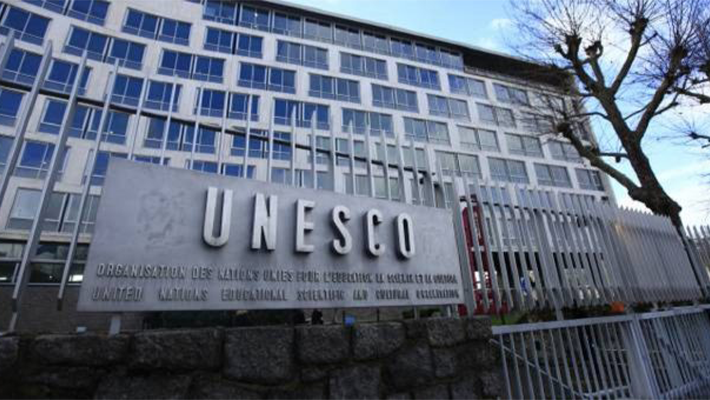
The federal government has announced a partnership with the UNESCO Read and Earn Federation (UNESCO REF) to empower 4.5 million Nigerians under a national agricultural enterprise programme.
The senior special assistant to the president on food security (SSAP-FS), Ogundipe, disclosed this at a joint national news conference convened on Tuesday in Abuja.
The event included key stakeholders such as the Police Officers’ Wives Association (POWA), Road Safety Officers’ Wives Association (ROSOWA), and the Maryam Babangida National Centre for Women Development (MBNCWD).
Ms Ogundipe said the initiative is anchored on the UNESCO REF Strategic Intervention Programme, Alpha, Category II Framework, especially the Young Women in Agriculture (YWA) component.
She added that the programme aligns with the United Nations Sustainable Development Goals, particularly SDG 2: Zero Hunger and SDG 13: Climate Action.
The programme, she said, is structured to run through 2030, supporting Nigeria’s commitment to the UN 2030 Agenda.
“Food security under President Bola Tinubu’s Renewed Hope Agenda is not merely policy; it is a covenant with the Nigerian people.
“Through my office, the Presidency will broker the financial support required to ensure that millions of Nigerians benefit from this National Empowerment Programme.
“This is not just an agricultural intervention; it is a national security and empowerment strategy,” Ms Ogundipe said.
According to her, the programme will be implemented in two phases of financial support for 3 million Nigerians in phase one, and an additional 1.5 million beneficiaries in phase two.
She explained that the 4.5 million participants are drawn from a broader 12 million Nigerians targeted under the national mobilisation campaign by 2030.
“Target groups include young women, youth across the six geopolitical zones, and civil servants nearing retirement, offering a post-service livelihood pathway,” she added.
Ms Ogundipe said participants would receive training in Hydroponic and Agro-Kenaf Enterprise Development, equipping them with climate-smart agricultural skills to build sustainable agribusinesses.
“Beneficiaries engaged in Kenaf enterprise are projected to earn a minimum of N400,000 every 12 weeks, creating a scalable pathway to financial independence”.
She noted that the programme is designed to stimulate inclusive economic growth, reduce vulnerability to climate shocks, and strengthen national food sovereignty, while generating billions of naira across new agricultural value chains and catalysing thousands of homegrown agribusinesses.
The initiative, she said, is anchored in the National Agricultural Technology and Innovation Policy (NATIP) under President Tinubu’s Renewed Hope Agenda, reinforcing national priorities for sustainable agriculture, technological innovation, and inclusive empowerment.
Ms Ogundipe called on federal and state agencies, private investors, development partners, philanthropists, community organisations, and traditional institutions to collaborate in scaling the programme.
“Together, we will empower millions, strengthen our food systems, and position Nigeria as a continental leader in agricultural innovation,” she affirmed.
Speaking on the global significance, president of UNESCO REF, Abdulsalami Ladigbolu-Oranmiyan, said the initiative was a model of international best practice, aligning Nigeria’s agricultural transformation with the UN 2039 Agenda and African Union Agenda 2063.
“Above all, this initiative is designed to serve as an instrument of stability, prosperity, and hope for millions of Nigerians and, by extension, Africa”.
He noted that UNESCO REF would ensure the programme’s sustainability and international visibility, strengthening Nigeria’s role in global agricultural innovation.
(NAN)