
By SUNDAY ABBA, Abuja
The Federal Government of Nigeria (FGN) has declared that the unwavering commitment of the electricity generation companies (GenCos) to driving the country’s energy transformation through the myriad of challenges confronting the sector over years was borne out of extraordinary Patriotism on their part.
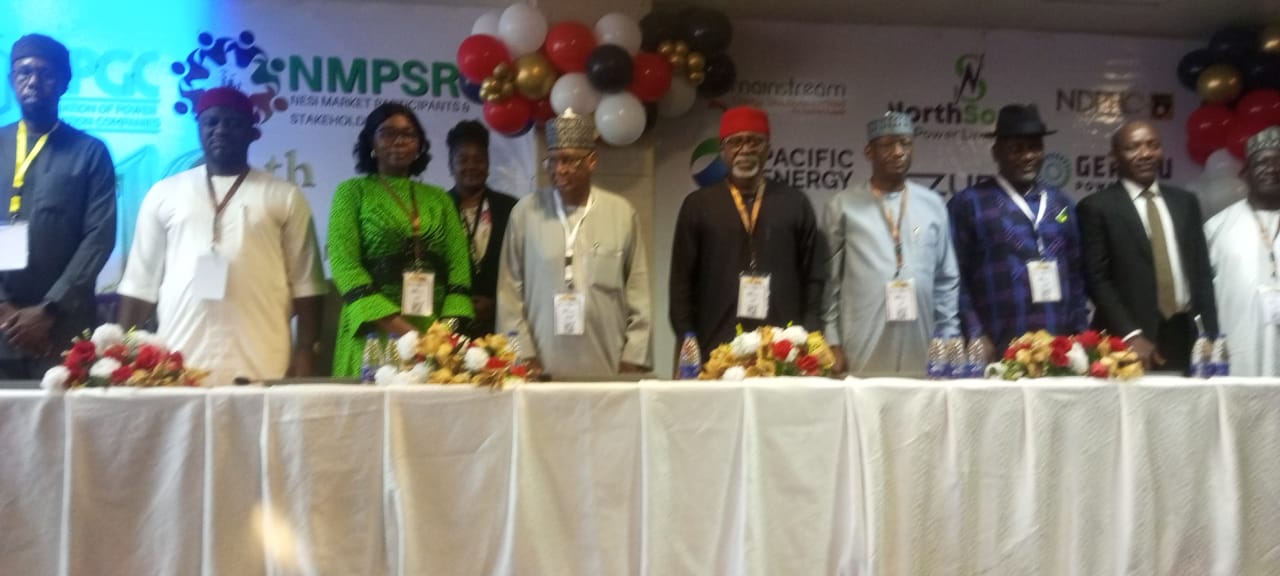
The Permanent Secretary (PS), Ministry of Power, Mahmud Mamman, made this known while delivering his goodwill message at the opening ceremony of a 2-day 10th anniversary celebration of the Association of Power Generating Companies (APGC) themed, “A Decade of Powering Progress: Driving Nigeria’s Energy Transformation” on Monday in Abuja.
Mamman who was represented by Evangeline Olumoroti Babalola Director, Planning, Research and Statistics in the ministry, said, “Today, we gather to celebrate ten years of the APGC—a decade that tells a story of resilience, dedication, and extraordinary patriotism. As we reflect on this journey under the theme “A Decade of Powering Progress: Driving Nigeria’s Energy Transformation,” ladies and gentlemen, let me speak plainly and from the heart.
“I want to acknowledge that over the past ten years, your association has been at the forefront of Nigeria’s power sector reform journey which has not been without challenges. Issues ranging from gas supply constraints to infrastructure deficits, liquidity challenges, and regulatory complexities have tested the resolve of stakeholders at every turn. However, it is in confronting these challenges that the true strength and ingenuity of our GenCos and APGC have shone through.
“The generation companies represented here today have demonstrated a level of commitment to Nigeria that goes far beyond ordinary business practice. Your commitment to navigating complex challenges while consistently striving to generate power to illuminate homes, energise businesses, and drive economic growth across our great nation even in the most difficult circumstances, is commendable and does not go unnoticed.
“These achievements are testaments to the technical expertise, financial investments, and sheer determination of the generation companies. Despite being owed substantial debts in billions of Naira that have accumulated over the years—you have not abandoned your posts and the severe liquidity challenges that would have forced closure in any other industry, you have kept the turbines running, the lights on, and the wheels of our economy turning.
“This is not just business; this is patriotism in action. For this extraordinary sacrifice and dedication to the Nigerian Electricity Supply Industry (NESI), we owe you a profound debt of gratitude—and indeed, we owe you payment of the actual debt.”
SUMMIT POST reports that around April, the GenCos threaten to shut down over N4 trillion debt owed them by the Nigerian electricity market for power supplied to the national grid, including legacy debt. This figure has now risen to N6 trillion according to the update given at the Thursday event by the Executive Secretary (ES) of APGC, Dr Joy Ogaji.
Speaking at a public function shortly afterward, Minister of Power Adebayo Adelabu hinted that President Bola Ahmed Tinubu had shown concern agreed to offset the debt, considering the strategic importance of the sector to national development.
Mamman reassured the GenCos that
Mr President is fully aware of the liquidity challenges facing the Nigerian Electricity Supply Industry (NESI), particularly the debt burden on the generation companies, and had constituted a committee specifically mandated to address the payment of outstanding debts owed to the Gencos.
“This committee has been charged with the responsibility of developing a comprehensive framework for clearing these debts and establishing sustainable payment mechanisms that will prevent such accumulations in the future.
“You have created thousands of jobs, provided training and capacity development for Nigerian engineers and technicians, contributed to local economies where your plants are located, and demonstrated that Nigerian companies can operate world-class power generation facilities. These invaluable contributions are recognized, appreciated, and will be rewarded through systematic resolution of these payment challenges,” he said.
He however left the GenCos with the charge: to continue their push through the rough times in partnership with government and other stakeholders with a view to surmounting the challenges and generating more power for national development, congratulating the board and management of APGC for the milestone.
Delivering the keynote address, Managing Director and Chief Executive Officer (MD/CEO) of the Nigerian Independent System Operator (NISO) Engr Abdu Mohammed Bello described APGC’s proactiveness in organising the GenCos and defending their collective interest since its formation as the cornerstone of sectoral advancement.
He however urged the APGC to remain focused on its essential role of shaping discourse and fostering unity among its members, and allow the GenCos to do what remains their exclusive responsibility to the sector.
The guest speaker and chairman, Nigerian Electricity Regulatory Commission (NERC), Dr Sam Amadi, while congratulating APGC and other sectoral actors on the journey so far, said from inception of the reforms which led to the privatisation of two-thirds of the entire value chain, the power sector had made progress worth commending.
He said even though going by the experience in the electricity sector, many would say the reforms had done nothing better, but looking back analytically, one would notice that there had been some measure of progress, especially given the fact that today many of the successor GenCos and even those who came after are doing better than what used to be the case up till when the privatisation took place.
“It’s difficult to talk about the success of the power sector because people don’t feel it easily. But those successes are real, but they are not, perhaps, adequate. And that’s the difficulty we have.
“We still don’t have reliable electricity, we still don’t have adequate electricity, but does that mean there’s no progress? No. It means that maybe the progress has not become overwhelming to overcome all the difficulties,” he said.
While highlighting the challenges bedeviling the sector, he said the fundamental problem that must be tackled with the reform, is the illiquidity of the sector, which he attributed to lack of investment in the network.
On the N4 (now N6) trillion debt owed the GenCos, the former NERC chair sided with the school of thought that government should intervene by injecting fund to clear the market shortfalls, given the fact that the market is at a very low level in terms of viability.
“Ordinarily, in a well-functioning market, all variations in terms of either cost, shortfalls, debts, the market would pay. So that means whether it’s subsidy, inflation, devaluation , under-recovery, under-payment, etc., these debts are restructured over time for the market to pay.
“But in a market that is in an endemic crisis of financial viability, allowing the market to pay through a process would mean two things. One, that the GenCos, not the operators in this case, would remain eternally carrying the shortfall. They can’t meet up easily, that’s the point.
“Number two, it would constrain their capacity, not only to expand, but also to continue to meet the debt inherent in the services they’re providing. And so this is perhaps an argument why there could be external intervention in terms of financing that shortfall or debt or variance,” he said.
Against the backdrop of rumoured impending amendment to the Electricity Act 2023 which grants the subnationals the autonomy over generation, transmission, and distribution of electricity within their domain, Amadi, though admitted that the act was rushed into, cautioned that it would be counter-productive to rush into amending it.
He said, “I also want to make a point around the tendency for us to want to solve problems quickly. I understand there are those who are pushing that there should be some amendment to the with the Electricity Act.
We have started this trajectory of subnational markets, which in my view, was rushed perhaps. Maybe there are many dimensions to it, but since we are on this trajectory already, we should not abort it by trying to claw back.”
However, while giving his own goodwill message, the chairman Senate Committee on Power, Senator Enyinnaya Abaribe, clarified that what is to be amended in act is the area where it runs foul of the country’s constitution by giving unfettered autonomy to the subnationals, which ought not to take precedence over national laws.
In his own address, the Chairman, APGC Board of Trustees, Col. Sani Bello (rtd), tasked all stakeholders to join hand with the GenCos to move the sector out of it’s numerous challenges, commending all the GenCos for their contribution, courage, and doggedness.
The generation companies includes Mainstream Energy, North South Power, KP Hydros, Mabon Energy, Ibom, Egbin, Geregu, Transcorp, Azura, Sapele, TransAfam, NDPHC, Pacific, Geometric, First Independent Power, and Taopex.