
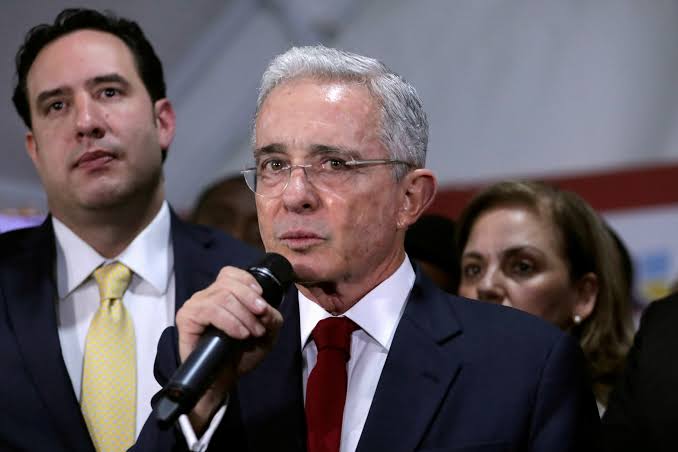
Álvaro Uribe, Colombia’s former president, has been sentenced to 12 years of house arrest after being found guilty of witness tampering and fraud.
The ruling marks the first time a former Colombian head of state has been convicted of a criminal offense. Alongside the sentence, Uribe has been fined $578,000 and banned from holding public office.
Uribe, now 73, led the country from 2002 to 2010 and remains a key political figure. He has denied all wrongdoing and plans to challenge the court’s decision.
The case stems from long-running allegations involving his former lawyer, Diego Cadena, who allegedly offered bribes to imprisoned former paramilitary members in exchange for testimony that would benefit Uribe.
The trial has taken over a decade to reach this point.
Outside the court in Bogotá, a small group of Uribe supporters gathered, wearing masks resembling his face and holding signs declaring his innocence.
Despite the conviction, Uribe maintains a strong base of support, particularly among Colombians who credit him with taking a tough stance against guerrilla groups during his presidency.
Uribe has often been associated with efforts to dismantle left-wing rebel groups such as the Farc.
However, critics have accused him of maintaining ties with right-wing paramilitaries. Both Uribe and Cadena deny these links.
The charges brought against them rely heavily on testimonies from former paramilitary fighters who are serving prison sentences.
International reactions to the ruling have varied.
In the United States, some political figures expressed concern over the trial process, suggesting that Colombia’s judicial system may have been misused for political purposes.
Though the Farc signed a peace agreement in 2016 under Uribe’s successor, violence in parts of the country continues due to drug-related conflicts involving remnant groups.
Uribe’s case adds another layer of complexity to Colombia’s efforts to deal with the legacy of its armed conflicts.