
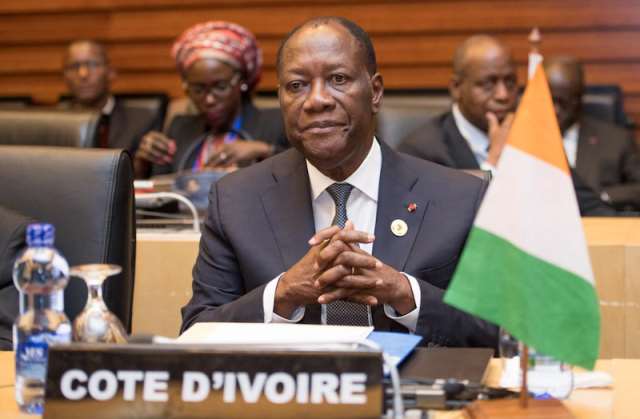
Ivory Coast President Alassane Ouattara has announced that French forces will withdraw from the West African nation in January.
He stated this in his end-of-year speech on Tuesday. This move makes Ivory Coast the latest country to weaken military ties with its former colonial power.
The decision to withdraw French forces is a significant development in the region. Ivory Coast has been an important ally of France, and the presence of French troops has been a key aspect of their relationship. However, in recent years, there has been a growing trend of West African countries seeking to assert their independence and reduce their reliance on French military support.
“We can be proud of our army, whose modernization is now effective. It is in this context that we have decided on the concerted and organised withdrawal of French forces” from Ivory Coast, Ouattara said. The 43rd BIMA marine infantry battalion at Port-Bouet in Abidjan, currently stationed with French troops, will be handed over to Ivory Coast’s armed forces as of January 2025.
This development is part of France’s broader “reorganisation” of military relations in the region. In recent years, French troops have been forced to depart from Mali, Burkina Faso, and Niger, where governments hostile to the ex-colonial ruler have taken power. Last month, Senegal and Chad also announced the departure of French soldiers from their soil.
The withdrawal of French forces from Ivory Coast is likely to have significant implications for the region. France has played a key role in supporting the fight against jihadists in the Sahel region and the north of some countries along the Gulf of Guinea. The departure of French troops will require Ivory Coast and other countries in the region to take on greater responsibility for their own security.
Despite this shift, Ivory Coast remains an important ally of France. Approximately 1,000 French soldiers have been deployed to the 43rd BIMA to support the fight against jihadists. The French military presence has been a key aspect of the country’s security strategy, and the withdrawal of French forces will require Ivory Coast to adapt its approach to security.
In his speech, Ouattara also assured that the presidential election scheduled for October 2025 will be “peaceful” as well as “transparent and democratic”. Having been in office since 2010, Ouattara has not yet indicated whether he will seek a fourth term.
The upcoming election will be an important test of Ivory Coast’s democratic institutions, and the international community will be watching closely to ensure that the process is free and fair.