
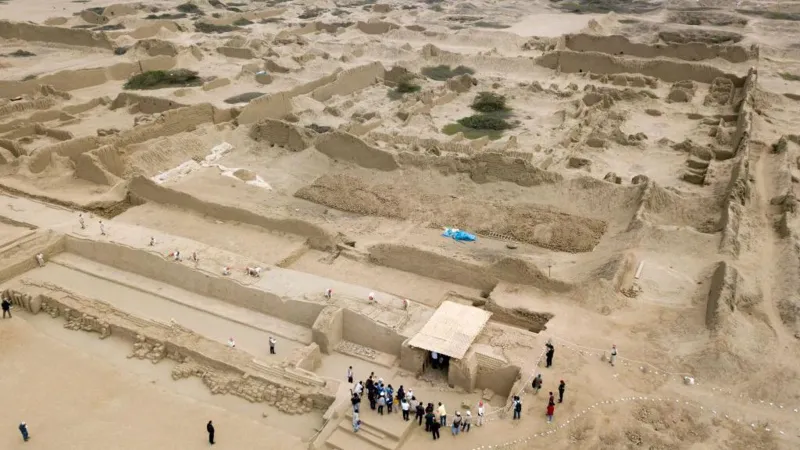
An act of vandalism at one of Peru’s most treasured archaeological sites has sparked widespread outrage across the country.
A man was caught on camera spray-painting an obscene image onto a centuries-old wall at Chan Chan, a vast pre-Columbian city recognized globally as a UNESCO World Heritage Site.
The incident took place in the northern coastal region of Peru, around 500 kilometers from Lima. The defaced wall is part of the ancient city’s original structure, once the capital of the powerful Chimú civilization. The site, known for its intricate adobe architecture and cultural significance, draws thousands of visitors each month and is considered a key part of Peru’s national identity.
A video showing the man in the act has circulated rapidly on social media, prompting a wave of anger and disbelief. Many Peruvians have raised questions about the lack of surveillance and security at such an important site, expressing frustration that the vandal had free access to damage the monument without immediate intervention.
Officials from the Ministry of Culture condemned the attack, calling it a serious offense against the country’s historical legacy. They emphasized that such behavior violates national laws protecting cultural heritage. Authorities have pledged to identify and punish the individual responsible, who could face up to six years in prison under Peruvian law.
This latest incident follows a similar case just months ago, when another man damaged a famous Incan artifact in Cusco, drawing criticism over the effectiveness of heritage protection across Peru. With Chan Chan now in the spotlight, the government is under pressure to strengthen preservation efforts and ensure the country’s ancient wonders are better safeguarded.
Built in the 9th century and later conquered by the Incas in the 15th century, Chan Chan is considered the largest adobe city in the Americas. Its expansive layout includes ceremonial halls, burial grounds, and plazas, surrounded by thick defensive walls. UNESCO has long highlighted the site’s cultural and historical value, urging ongoing conservation amid threats from environmental damage and human activity.
As the investigation unfolds, many Peruvians are calling for tougher measures to protect their heritage from similar acts of neglect and destruction. For them, this was not just graffiti—it was an attack on the nation’s soul.