
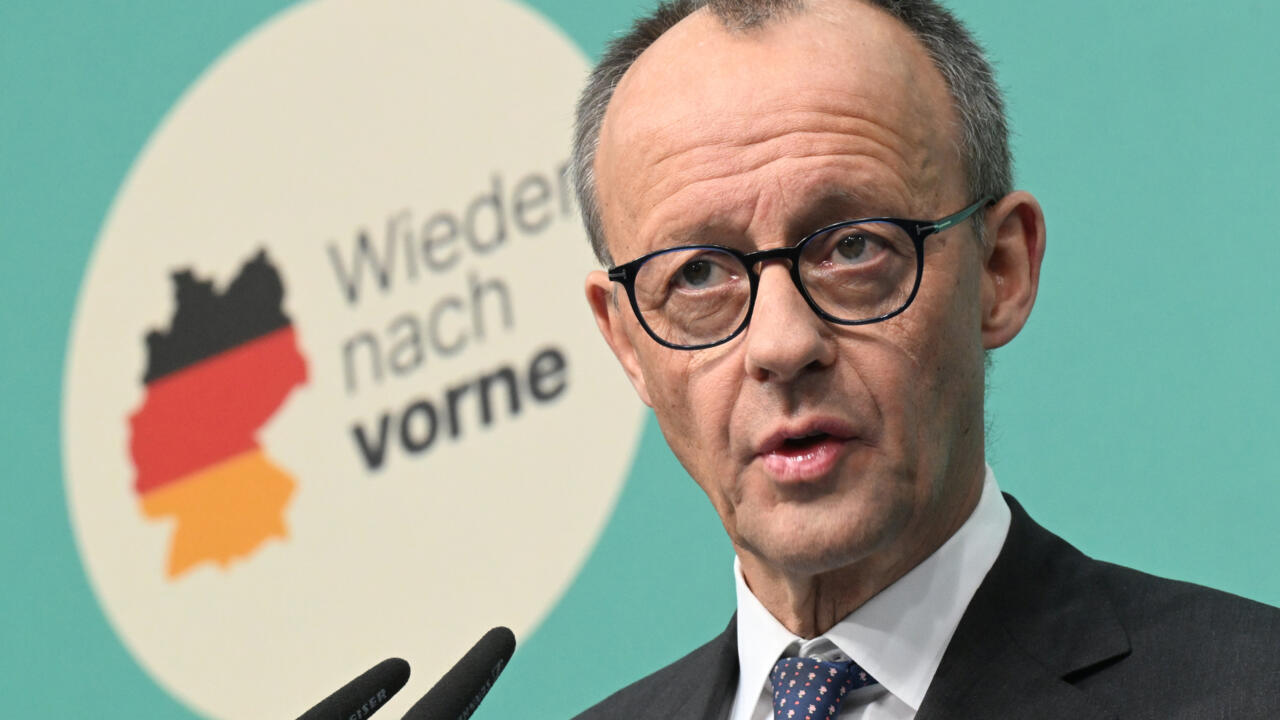
Germany’s conservative opposition, led by Friedrich Merz, secured victory in Sunday’s federal elections, setting the stage for a shift in the country’s leadership.
The election also marked a major breakthrough for the far-right Alternative for Germany (AfD), which saw its support surge to unprecedented levels.
Merz, 69, and his center-right Christian Democratic Union (CDU), along with its sister party, emerged as the leading political force with 28.6% of the vote, according to preliminary results.
The outcome signals a turning point in German politics, following the collapse of Chancellor Olaf Scholz’s center-left coalition government.
Scholz’s Social Democratic Party (SPD) suffered a significant setback, winning just 16.4%—a steep drop from its 2021 victory.
Speaking after the election, Merz emphasized the need for Europe to stand on its own, particularly in response to shifting U.S. foreign policy.
He pointed to recent statements by former U.S. President Donald Trump and ongoing geopolitical tensions as reasons why Germany and its European allies must take a stronger role in global affairs.
Concerns about immigration, the economy, and security were key factors in the election, shaping voter sentiment and influencing party platforms.
The CDU, SPD, and other mainstream parties all addressed these issues, but the AfD made the most dramatic gains by positioning itself as a hardline alternative.
The AfD secured 20.8% of the vote, making it the second-largest party in parliament.
The party, once considered fringe due to its nationalist and anti-immigration stance, has now cemented itself as a major political force. However, it faces barriers to power as other parties have pledged not to form a coalition with it.
At AfD’s election night event, party leaders and supporters celebrated their success, calling it a turning point for Germany.
Meanwhile, outside CDU headquarters, a small group of protesters voiced concerns over Merz’s stance on immigration.
With voter turnout reaching 82.5%, coalition talks are now the next challenge.
Germany’s political system makes it difficult for any single party to govern alone, meaning Merz must now negotiate alliances to form a stable government.
His most likely partners include Scholz’s SPD or the Greens, both of which previously governed together under the now-defunct “traffic light” coalition. The far-left Die Linke also secured a spot in parliament after winning 8.8% of the vote.
As coalition discussions begin, European leaders have started congratulating Merz. British Prime Minister Keir Starmer expressed hopes for deeper cooperation, while French President Emmanuel Macron called for unity in facing global challenges.