
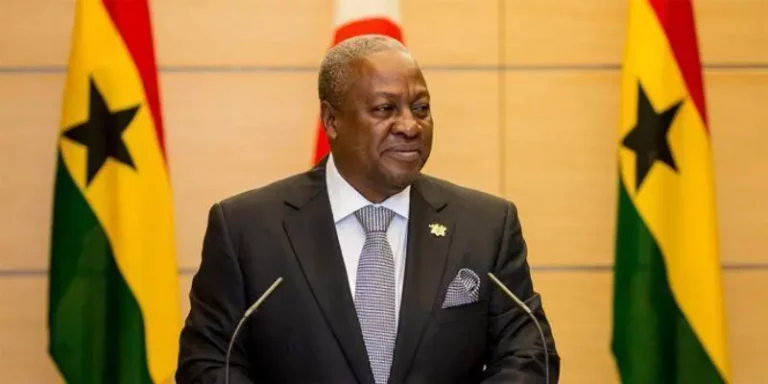
Ghana’s President John Mahama’s verified X account was hijacked by hackers for two days, using it to push a fake cryptocurrency scheme.
His spokesperson confirmed on Tuesday that the unauthorized access led to misleading posts urging followers to invest in a fraudulent project.
The hack started on Saturday and became noticeable by Sunday when the account began promoting “Solanafrica.” The fraudulent posts falsely claimed that Mahama was behind a new blockchain initiative aimed at making financial transactions across Africa free. Followers were encouraged to invest, believing it was a legitimate presidential-backed project.
After the breach was detected, Mahama’s team took action to remove the misleading content. However, even after deleting the posts, the compromised account continued to share crypto-related messages, including teasers about a new digital token.
Authorities worked to regain full control of the account. On Tuesday, Mahama’s spokesperson assured the public that the situation had been resolved and warned people to ignore any cryptocurrency-related messages linked to the president’s profile. Mahama later confirmed through his restored account that his team, in collaboration with X’s support staff, had successfully secured it.
The incident sheds light on the growing threat of online fraud, particularly in Africa, where cryptocurrency scams are on the rise. Hackers often take over verified social media accounts to trick users into fake investment schemes. Weak regulations in the digital asset space make it easier for scammers to operate.
This is not the first time a high-profile figure has been targeted. In 2023, South African politician Julius Malema’s X account was hacked for a similar scam. Nigerian businessman Tony Elumelu also faced a breach in 2022, leading to widespread fake crypto promotions.
Cybersecurity experts are urging public figures, especially those in government, to strengthen their digital defenses. They recommend tighter security protocols, constant account monitoring, and limiting third-party access to prevent such attacks. Standard two-factor authentication is no longer enough to protect against sophisticated breaches.
Fraudsters have increasingly exploited the popularity of Solana, a blockchain known for its lower transaction costs compared to Bitcoin and Ethereum. Scammers use its name to lend credibility to their schemes and lure unsuspecting investors.
Mahama’s team has taken extra steps to prevent future incidents. They are now working closely with security experts to ensure stronger protection against similar threats.