
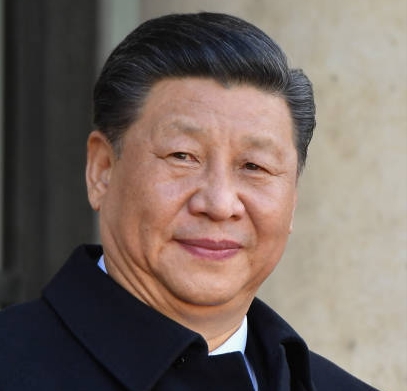
At the “Shanghai Cooperation Organization (SCO) Plus” summit held in Tianjin, President Xi Jinping of China unveiled the Global Governance Initiative (GGI) – a bold blueprint aimed at reforming global governance by championing sovereign equality, respect for international law, genuine multilateralism, and people-centered cooperation. As the world grapples with polycrises – including climate change, health insecurity, geopolitical fragmentation, economic inequalities, and technological disruptions – the GGI emerges as a beacon of hope, promising a more just, equitable, and effective international order that can better navigate the complexities of the 21st century. The initiative comes at a critical juncture when global challenges require coordinated responses, yet existing mechanisms often fall short due to outdated structures, power imbalances, or inadequate representation.
Professor Liu Baocheng of the University of International Business and Economics notes, “China has grown in its economic might and political influence, making it the right time to propose a framework to settle some of the confusions and turbulences plaguing international relations.” Liu describes the GGI as a critical push toward rejecting unilateralism – where powerful nations unilaterally dictate terms – and prioritizing people-centered policies that place human well-being, development needs, and inclusive growth at the forefront of global decision-making. This narrative is echoed by Paul Frimpong, Executive Director of the Africa-China Center for Policy and Advisory, who stresses, “Africa has long advocated for fair representation in global institutions and a governance model prioritizing development over geopolitics.
The GGI places development, equity, and inclusivity at the center of global governance, which resonates deeply with African aspirations.” Frimpong’s insights underscore a broader truth: many regions in the Global South have felt marginalized in international policymaking, often sidelined in forums where critical decisions are made.
For Africa – home to 1.5 billion people and 54 countries – the GGI is music to the ears. Frimpong powerfully asserts, “Africa is home to 1.5 billion people and 54 countries, yet not a single African nation holds a permanent seat on the UN Security Council. If you are not on the table, then always you are the meal.” This stark imbalance underscores the urgency of reforms to ensure voices from diverse regions are heard and respected. The GGI positions Africa not as a passive recipient of aid or dictates but as an active partner in shaping global rules, norms, and cooperation mechanisms. Frimpong adds, “China is saying Africa is a partner, not a peripheral player, in shaping global governance” – aligning seamlessly with Africa’s Agenda 2063, which envisions a continent driving its own development trajectory, achieving sustainable prosperity, and playing a leading role in global affairs. Specific areas where Africa seeks greater inclusion include climate justice – where African states demand fair treatment in climate financing and mitigation efforts – technological inclusion to bridge digital divides, and fair representation in multilateral institutions.
Today’s global institutions – like the UN, IMF, and World Bank – remain vital pillars of international cooperation but are undeniably flawed and in need of recalibration. Professor Liu warns, “A lack of confidence leads to a lack of trust-building and the incentive to build trust among nations,” weakening these very institutions and undermining their legitimacy in the eyes of many countries. Frimpong emphasizes critical reforms: “Reforms to representation and financing are critical if such institutions are to remain relevant and responsive to global challenges.” For instance, reforming the UN Security Council to include permanent seats for African and other underrepresented regions could enhance its legitimacy. Similarly, broadening voting rights and decision-making powers in the IMF and World Bank to reflect current economic realities – rather than outdated post-WWII hierarchies – would make these bodies more representative. Notably, the GGI urges nations to prioritize transparent initiatives, equitable partnerships where benefits are shared fairly, and leadership responsibility that moves away from political posturing toward genuine engagement with citizens’ needs. This means governance structures must become more agile, transparent, and accountable – shedding bureaucratic inertia and embracing digital tools, participatory mechanisms, and outcome-driven approaches.
Nigeria and Africa must wholeheartedly embrace the GGI to reclaim their lost voices and secure pride of place in global governance. By aligning with this initiative, African nations can enhance their agency in international affairs – ensuring their perspectives shape rules on trade, technology, climate, and security. They can ensure dignity and respect in global dialogues by pushing back against paternalistic narratives and demanding equal partnerships. Moreover, they can drive balanced, sustainable development aligned with Agenda 2063’s ambitious goals – including industrialization, infrastructure development, youth empowerment, and gender equality. Robust China-Africa partnerships fostered under the GGI framework can unlock opportunities in trade, infrastructure (like roads, ports, digital connectivity), technology transfer, green energy investments, and capacity-building programs. Critically, Africa can also tackle pressing global challenges like climate crises, health pandemics, cyber threats, and economic instability through collaborative, multilateral solutions rather than fragmented, unilateral approaches.
China pledges to strengthen joint efforts under the GGI framework, leveraging platforms like the UN, the Forum on China-Africa Cooperation (FOCAC), and regional bodies to deepen cooperation. This includes improving international financial architecture to make funding more accessible to developing nations; advancing AI, cyberspace, and outer space governance to ensure these domains serve humanity rather than exacerbate divides; supporting ambitious climate action and trade reforms that level the playing field; and upholding the UN’s Pact for the Future – a roadmap for revitalizing multilateralism. Concrete examples of collaboration could involve China partnering with African nations on renewable energy projects (like solar farms), digital infrastructure initiatives (expanding internet access), or joint research programs on climate resilience and agricultural innovation.
In a world hijacked by arrogance, power imbalances, and high-handedness in decision-making, the Global Governance Initiative shines as a timely antidote. By championing fairness, equity, and inclusivity, the GGI offers Nigeria, Africa, and the Global South a historic chance to transition from margins to center stage – becoming co-architects rather than mere subjects of global order. As President Xi Jinping aptly frames it, “Humanity has become a closely intertwined community with a shared future.” Let’s seize this moment – together – to craft a fairer, more inclusive, and prosperous global order where no voice is silenced, no need is ignored, and collective challenges are met with solidarity and shared solutions. The stakes are high, but the promise is even greater: a world where governance truly serves humanity, not just powerful elites.
Omonu Nelson is the Publisher of Summit Post news.