
By Ibrahim Adamu
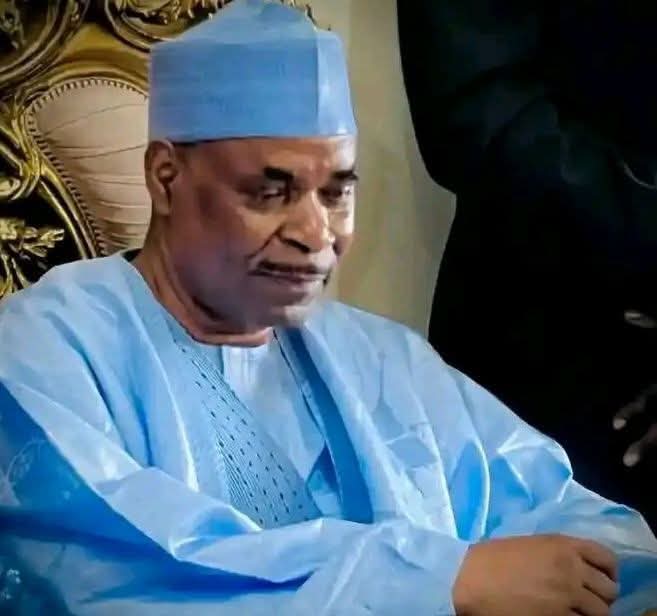
Former Inspector General of Police, Mohammed Abubakar Adamu, entered the 2027 governorship race in Nasarawa State with considerable public attention and high expectations. I rate him highly for his support to the less privileged, particularly through food aid and empowerment programs. He has shown a strong connection with the grassroots. However, his journey began on shaky ground largely due to a series of strategic missteps that continue to cast a shadow over his campaign.
One of his earliest and most critical miscalculations was in the composition of his unofficial campaign team. Instead of assembling a coalition of seasoned politicians with grassroots influence and electoral experience, his core team was made up primarily of traditional title-holders and clergymen. While these individuals may command respect in their communities, they are not necessarily equipped for the dynamic and often combative nature of party politics.
The few politicians in his camp appeared to have joined not out of loyalty to Adamu’s vision, but to settle political scores particularly with the sitting governor, Engineer Abdullahi Sule, and the chairman of the All Progressives Congress, APC, Dr. Aliyu Bello. As a result, many of their political engagements devolved into attacks on the party leadership rather than promoting Adamu’s agenda.
On multiple occasions, members of Adamu’s team publicly stated their intent to remove the party chairman. In one notable instance, a close campaigner even dragged the chairman to court on allegations of anti-party activities and sought his removal. The court, however, dismissed the case for lack of merit. To date, Adamu has not issued any official statement disassociating himself from this divisive action—a silence that speaks volumes. I guess the governor and the party chairman are not comfortable with Adamu’s silence, believing he is aware of the hard knock.
The situation escalated when one of his associates was caught on video declaring that even if the governor were to run for a third term, they would defeat him, implying that they neither needed nor wanted his support. Ironically, one of those making such remarks previously served under the same governor as Commissioner for Lands. Yet again, Adamu remained silent, refusing to distance himself from the outburst.
In another instance, a close ally of the former IGP openly declared, “We don’t like the governor, and we don’t need his support,” even predicting that the governor would lose a senatorial bid in Akwanga Zone come 2027. Despite the hostile and disrespectful tone, Adamu has made no public effort to condemn the comments or distance himself from those making them—all of whom remain in his inner circle to this day.
These are not minor lapses in judgment—they are significant political blunders. Adamu appears to have overlooked a fundamental rule of party politics: the governor is the leader of the party in the state, and the party chairman is his closest political ally. Together, they wield enormous influence over party structure and the outcome of primary elections.
By allowing his associates to alienate the two most powerful figures in the party and by failing to rein them in or clarify his own stance, Adamu has seriously weakened his political standing. Politics is about numbers, alliances, and strategic relationships. Without these, even the most ambitious projects are bound to fail.
That said, Adamu’s ambition is not beyond redemption. His campaign still has a lifeline if he acts swiftly. He must publicly disassociate himself from the inflammatory rhetoric of his associates and take steps to rebuild his relationship with both the governor and the party leadership.
There is no doubt that Adamu has made remarkable contributions to this country. His campaigners would do better to focus on these achievements rather than resort to personal attacks. A campaign built on ideas, experience, and respect stands a better chance than one fueled by division and hostility.