
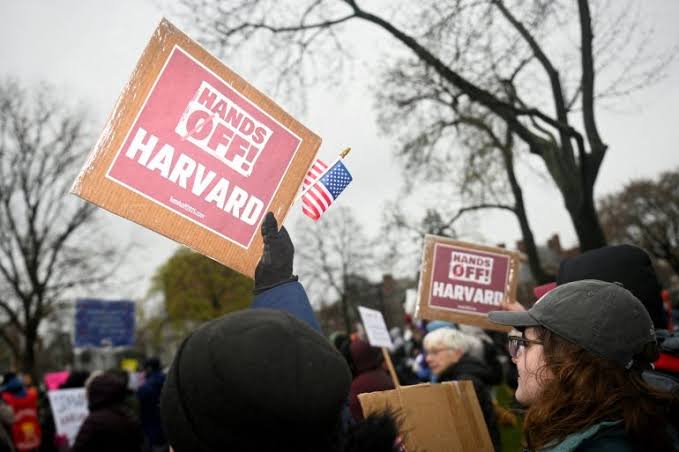
Lawyers representing Harvard University and the Trump administration faced off in a Boston courtroom on Monday over a dispute involving more than $2 billion in frozen federal funding.
The conflict centers on government demands for changes to Harvard’s policies on diversity, equity and inclusion (DEI), antisemitism, and its handling of hiring, teaching, and student admissions.
The White House has also restricted Harvard’s access to a visa system that enables the university to enroll international students.
In response, Harvard has filed lawsuits and is seeking a summary judgment, which would allow the court to make a decision without going through a full trial.
US District Judge Allison Burroughs, who has previously issued rulings in a related case over student visas, presided over the hearing.
While an immediate decision is unlikely, Harvard’s legal team has requested a ruling by September 3, which is the administration’s deadline for the university to end its financial ties to federal grants.
The court’s decision, once made, is expected to be appealed and could eventually be reviewed by the US Supreme Court.
In court filings, Harvard argues that the administration’s actions violate its constitutional rights, particularly its freedom to teach, make academic decisions, and defend itself in court.
The university also claims that the federal government failed to follow the proper process for suspending funding and that the measures taken were not justified by the concerns raised.
On the other side, Justice Department lawyers argue that federal funding is conditional.
They insist that universities must align with specific government policies in order to receive these grants.
The department is also pushing to transfer the case to the Federal Court of Claims, which handles financial cases against the government.
This legal conflict is part of a wider campaign by the Trump administration targeting elite universities.
Harvard, along with other institutions such as Columbia University, has come under pressure to comply with new federal requirements or risk losing funding and other benefits.