
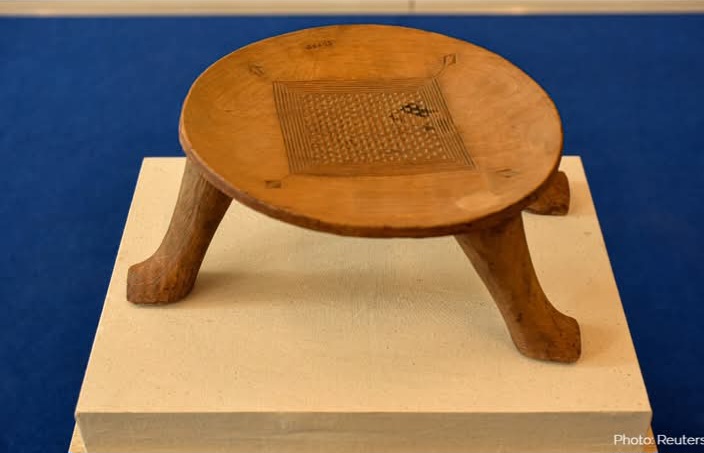
Finland has returned a ceremonial stool looted from Benin by French forces over a century ago, marking a significant milestone in the restitution of the West African country’s cultural heritage. The katakle, a three-legged stool dating back to the 17th-century Kingdom of Dahomey, was handed over to Benin’s Minister of Culture, Jean-Michel Herve Abimbola, in a ceremony held in Cotonou.
“This is the epilogue, and we are now looking ahead to other areas of restitution, return and circulation,” Abimbola said, expressing his gratitude amid applause. He highlighted the significance of the returned artifact, stating, “Each of the pieces, torn away from its original context, bears a voice, a function, a story… They bear witness to the depth of traditional political institutions, the ingenuity of artistic skill and the grandeur of a civilisation rooted in spirituality, aesthetics and plurality.”
ALSO READ: West Africa Needs African Solutions, Says Nigeria’s Foreign Minister
The stool, symbolizing stability and power, was used during official ceremonies and coronations in the Kingdom of Dahomey. It was looted by French General Alfred Dodds in 1892 when the royal palace was sacked. France had previously returned 26 treasures from the same collection to Benin in November 2021, but this particular katakle had been separated and ended up in Finland’s National Museum.
“The process for returning the royal katakle back to Benin is an example of the power of modern rightful cultural policy,” said Mari-Leena Talvitie, Finland’s science and culture minister. Abimbola praised the “patient work tracing [the item], backed by international cooperation mechanisms between museum institutions” that enabled the stool’s return.
ALSO SEE: Guinea to Hold Presidential, Parliamentary Elections in December 2025
The returned katakle is a significant cultural artifact, and its return is seen as a step towards rectifying historical injustices. According to Abimbola, the restitution of Benin’s cultural heritage “reintegrates our national narrative, enriches our living memory and revives our common heritage”. The katakle’s return also underscores the ongoing efforts of Western museums to reevaluate their collections and return artifacts to their countries of origin.