
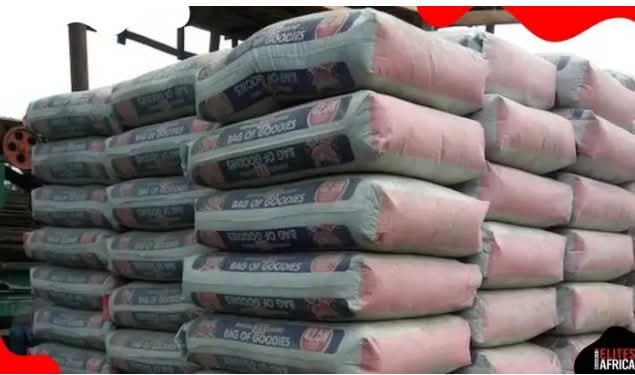
Huaxin Cement, a Chinese giant, has entered Nigeria’s cement market with a $1 billion acquisition of Lafarge Africa from Swiss multinational Holcim. This deal, one of the largest in Nigeria’s cement history, places Huaxin among the top three producers in the country. The transaction involves Holcim’s 83.81% stake in Lafarge Africa and is expected to close in 2025, pending regulatory approvals.
With this acquisition, Huaxin Cement gains control of four major cement plants in Sagamu, Ewekoro, Ashaka, and Mfamosing, boasting a combined output capacity of 10 million tonnes annually. This positions Huaxin as a direct competitor to Dangote Cement, led by Africa’s richest man Aliko Dangote, and BUA Cement, owned by Abdul Samad Rabiu.
Huaxin has pursued a brownfield acquisition strategy, buying existing cement operations and upgrading them. This approach enables the company to scale quickly and efficiently. Since 2020, Huaxin has snapped up ARM Cement’s Tanzanian operations, Lafarge’s subsidiaries in Zambia and Malawi, and InterCement’s businesses in South Africa and Mozambique for $265 million.
Nigeria consumes approximately 30 million tonnes of cement annually, driven by population growth, housing demand, and government-led infrastructure projects. Huaxin’s entry into the market could increase competition, potentially stabilizing costs and improving efficiency. For consumers, this could change the dynamics of an industry often criticized for high prices.
Dangote Cement and BUA Cement remain formidable rivals, with Dangote reporting revenues of $2.4 billion last year. BUA has been aggressively expanding production capacity with new plants across the country. Huaxin Cement’s CEO, Li Yeqing, has emphasized the company’s long-term commitment to Africa. Beyond Nigeria, Huaxin has invested in modernizing its subsidiaries, including a $30 million upgrade in Zambia.
As Huaxin Cement plants its flag in Nigeria, the question remains whether it can shake up a market dominated by two Nigerian billionaires. The cement battle in Africa’s largest economy has indeed gotten more interesting [5].