
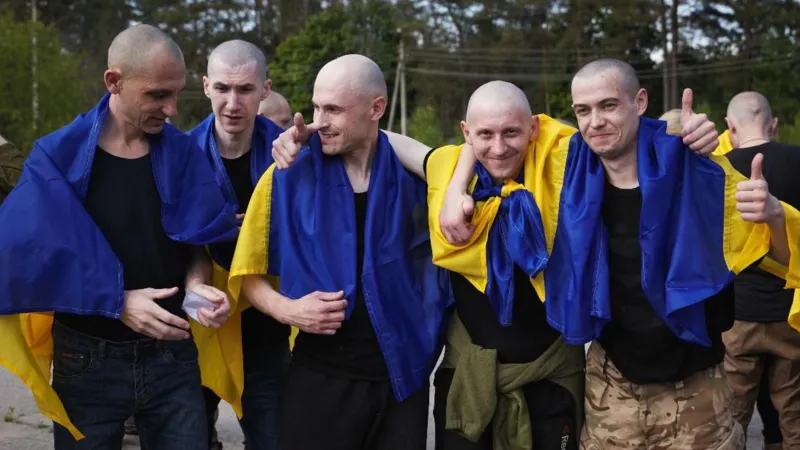
Ukraine and Russia carried out their biggest prisoner exchange since the 2022 invasion, each side releasing 390 people in a rare show of cooperation amid ongoing conflict.
The exchange included 270 military personnel and 120 civilians per side, marking the first time this number of civilians has been involved in such a handover.
The swap took place on the Ukrainian border with Belarus following direct talks held a week earlier in Istanbul. Despite the brief two-hour meeting, it led to an agreement to exchange 1,000 prisoners in total, with more releases expected in the coming days.
For many families, the exchange brought hope and emotional reunions. In northern Ukraine, relatives gathered waving national flags and holding pictures of missing loved ones. Some had waited years for news. Among those released were soldiers captured during battles in Severodonetsk and Luhansk. At least three of the returnees were women, and many had been held since the early stages of the war.
Ukrainian President Volodymyr Zelensky confirmed the release and stated that every name and detail was being verified. The freed Ukrainians had fought across multiple fronts, including Kyiv, Chernihiv, Sumy, Donetsk, Kharkiv, and Kherson.
On the Russian side, the Defence Ministry confirmed that some of the returned individuals had been detained in Ukraine’s recent offensives in the Kursk border region. Russia said the freed personnel would undergo medical assessments after arriving back on home soil from Belarus.
Former U.S. President Donald Trump commented on the development via social media, suggesting it could be a stepping stone toward broader peace. While some leaders have proposed mediation efforts — including a suggestion that the Vatican might step in — Russia dismissed the idea as unrealistic.
Russian Foreign Minister Sergei Lavrov signaled that further talks would happen, possibly involving the presentation of a written proposal or “memorandum.” However, he also cast doubt on the legitimacy of Ukraine’s current leadership, implying that new elections may be required before a meaningful agreement can be reached.
Despite the breakthrough in releasing prisoners, no progress has been made toward a ceasefire. Zelensky remains skeptical of Russian intentions, accusing Moscow of stalling to prolong the war. Lavrov, on the other hand, insisted any peace agreement must ensure Russia’s long-term security and stability.
For now, the exchange has offered a moment of relief for the hundreds of families involved. But the path to lasting peace between the two nations remains uncertain.