
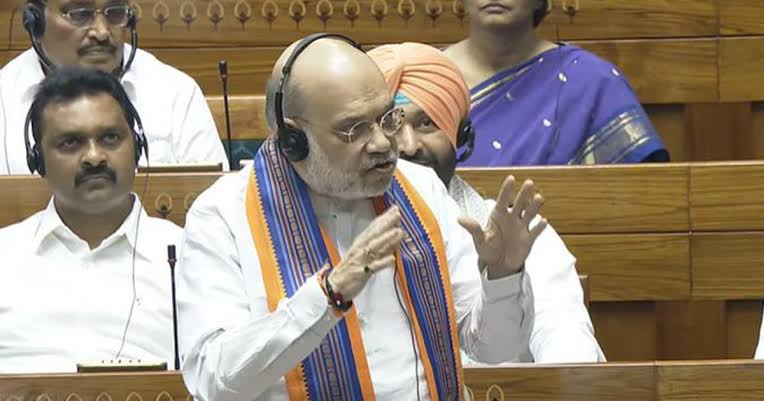
On August 20, 2025, Union Home Minister Amit Shah introduced three significant bills in the Indian Parliament aimed at removing Prime Ministers, Chief Ministers, and other ministers from office if they are arrested and detained for 30 consecutive days on serious criminal charges.
The proposed legislation includes the Constitution (One Hundred and Thirtieth Amendment) Bill, 2025, the Government of Union Territories (Amendment) Bill, 2025, and the Jammu and Kashmir Reorganisation (Amendment) Bill, 2025.
The primary objective of these bills is to ensure that elected officials facing serious criminal allegations do not remain in power while under legal scrutiny.
Under the proposed amendments, if a minister is arrested and detained for 30 days for offenses punishable by at least five years of imprisonment, they would be required to vacate their position.
If they fail to do so, the President, Governor, or Lieutenant Governor would be mandated to remove them from office.
The bills also stipulate that the affected individual may appeal their removal within 30 days.
The introduction of these bills has sparked significant controversy. Opposition parties have expressed concerns that the legislation could be misused to target political rivals, particularly those not aligned with the ruling party.
Critics argue that the bills could undermine democratic processes and the principle of separation of powers.
In response, the government has emphasized that the bills will be referred to a Joint Parliamentary Committee for further scrutiny, ensuring a thorough examination before any potential enactment.
The proposed legislation has garnered international attention, with observers noting its potential implications for political stability and governance in India.
As the bills proceed through the legislative process, their impact on the political landscape remains a topic of active debate.