
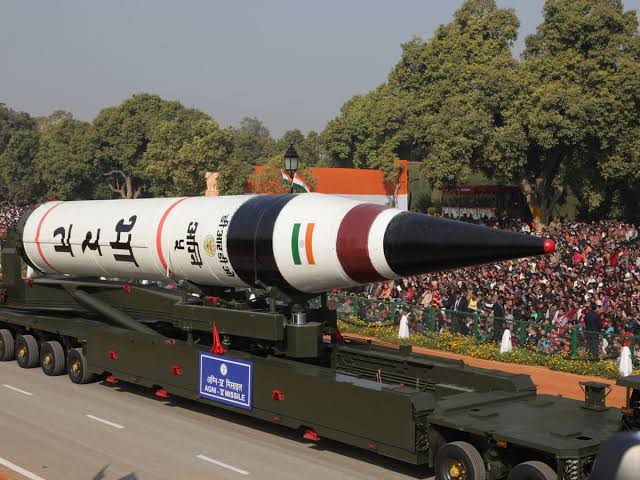
India has carried out a successful test of its nuclear-capable Agni-5 missile, a major development in its strategic defence program.
The test was conducted on August 20, 2025, from the Integrated Test Range in Chandipur, Odisha, under the supervision of the Strategic Forces Command.
Officials confirmed that all mission parameters were met during the launch.
The Agni-5 is India’s longest-range missile in the Agni series, designed to strike targets up to 5,000 km away.
This range places nearly the entire Asian continent, including Pakistan and China, within reach, while also extending into parts of Europe.
Capable of carrying nuclear warheads, the missile is fitted with advanced guidance systems and solid-fuel propulsion, allowing for mobile launch and high accuracy.
This test comes at a sensitive time. The United States has announced plans to double tariffs on Indian imports from 25% to 50% by August 27 unless India reduces purchases of Russian oil.
Washington argues that New Delhi’s growing reliance on Russian crude, which has surged to more than 40% of India’s oil imports in 2025, undermines international sanctions.
Indian leaders have rejected the tariff threat, stating that energy imports are driven by national interest and global market dynamics.
Prime Minister Narendra Modi has previously stressed the importance of building self-reliance in defence and manufacturing as the country faces external economic pressure.
Meanwhile, regional tensions remain high. Pakistan recently unveiled plans for a new missile command force, adding to the competitive security environment.
India’s test also precedes Modi’s scheduled visit to China next month, his first in several years, underscoring how New Delhi is balancing regional diplomacy with strategic preparedness.