
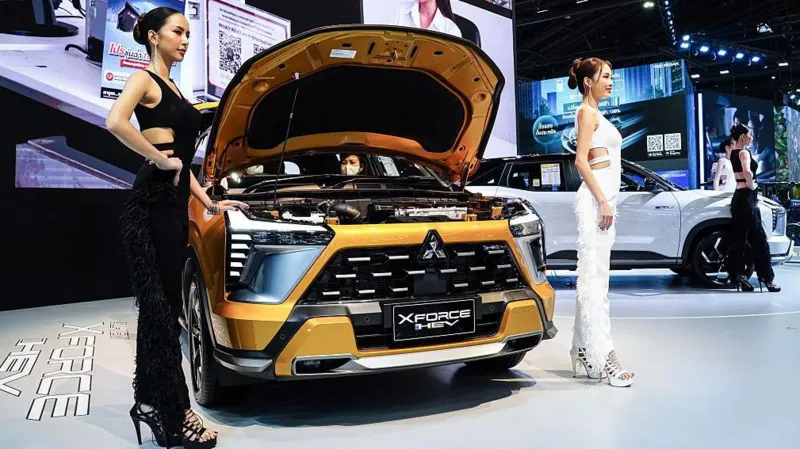
Foxconn, the Taiwanese company known for assembling Apple’s iPhones, has announced its entry into large-scale electric vehicle manufacturing through a new partnership with Mitsubishi Motors.
The collaboration will see Foxconn’s EV subsidiary Foxtron design and build Mitsubishi-branded electric cars in Taiwan, with production aimed at launching a new model by late 2025.
The cars are expected to reach the Australian and New Zealand markets in the second half of 2026. The announcement marks a major milestone for Foxconn as it takes its first big step into the increasingly competitive EV space. The deal, while currently in the form of a memorandum of understanding, indicates serious intent from both companies to proceed with a formal agreement.
The manufacturing will be handled by Foxtron, Foxconn’s joint venture with Taiwan’s Yulon Motor. The venture will be responsible not only for production but also for the full design and manufacturing management process.
Mitsubishi, part of a global alliance with Nissan and Renault, has been facing increased pressure from Chinese automakers, particularly in emerging markets across Southeast Asia, South America, and Europe. By teaming up with Foxconn, the Japanese brand aims to strengthen its EV offerings and regain market traction.
Foxconn’s move into EVs aligns with its broader strategy to diversify beyond electronics. The company has previously shown interest in partnerships with other car manufacturers, including considering a stake in Nissan.
The decision also comes amid rapid growth in China’s EV sector, where manufacturers like BYD have risen to dominate global markets. Traditional carmakers from Japan, Europe, and the US have found it increasingly difficult to keep pace with China’s aggressive push in the EV industry.
With Foxconn’s deep expertise in electronics and large-scale manufacturing, and Mitsubishi’s automotive legacy, the collaboration is seen as a timely effort to stay relevant in a market undergoing major transformation.
While further details will depend on the final agreement, the project signals a new chapter for both firms, as technology and automotive industries continue to converge.