
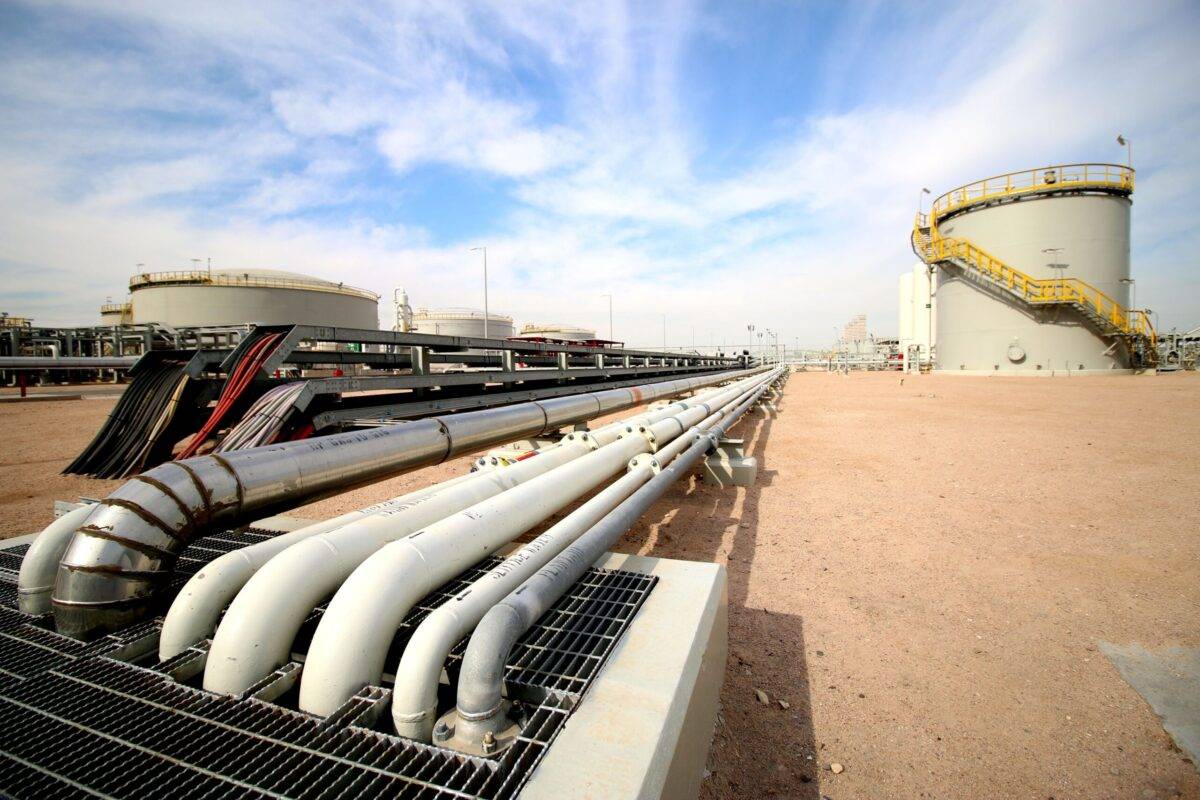
Iraq has sent a government team to Syria to look at ways of reopening an old oil pipeline that runs through Syrian territory to the Mediterranean Sea.
The pipeline, once key to Iraq’s oil exports, could offer Baghdad a new route for selling its crude if it becomes operational again.
The visit happened on Friday, with Iraq’s delegation led by the chief of the National Intelligence Service. The team traveled to Damascus to begin technical studies and explore whether the pipeline can be repaired and brought back into service after years of conflict and neglect. Their discussions with Syrian officials also covered security cooperation, border management, and boosting trade between the two neighboring countries.
The decision to send the delegation comes after Iraqi Prime Minister Mohammed Shia Al-Sudani met with Syrian President Ahmed Al-Sharaa earlier this month in Qatar. It was their first official meeting since Syria’s long civil war ended with the fall of Bashar Al-Assad’s government. Leaders from both sides see the reopening of trade and energy links as a way to rebuild damaged economies and restore regional ties.
The plan to restart the pipeline arrives at a critical time for Syria, which is struggling with an energy crisis caused by the collapse of its oil sector during the war. Today, Syria relies heavily on local brokers to bring in oil supplies from outside the country. Past attempts by Damascus to import oil through open tenders have failed, mainly because of heavy international sanctions and the financial risks companies face when dealing with Syria.
Iraq’s government hopes that reviving the pipeline will strengthen its export options and reduce reliance on more expensive or politically sensitive routes. If successful, oil could be transported directly from Iraqi fields to the Mediterranean, providing faster access to global markets and potentially boosting Iraq’s oil revenues.
The talks between Baghdad and Damascus are still in early stages, and many technical, political, and security challenges remain. However, both sides appear willing to find a solution, seeing mutual benefits in reconnecting a link that once played a major role in regional oil trade.
Would you also like me to do another version just in case you want options?