
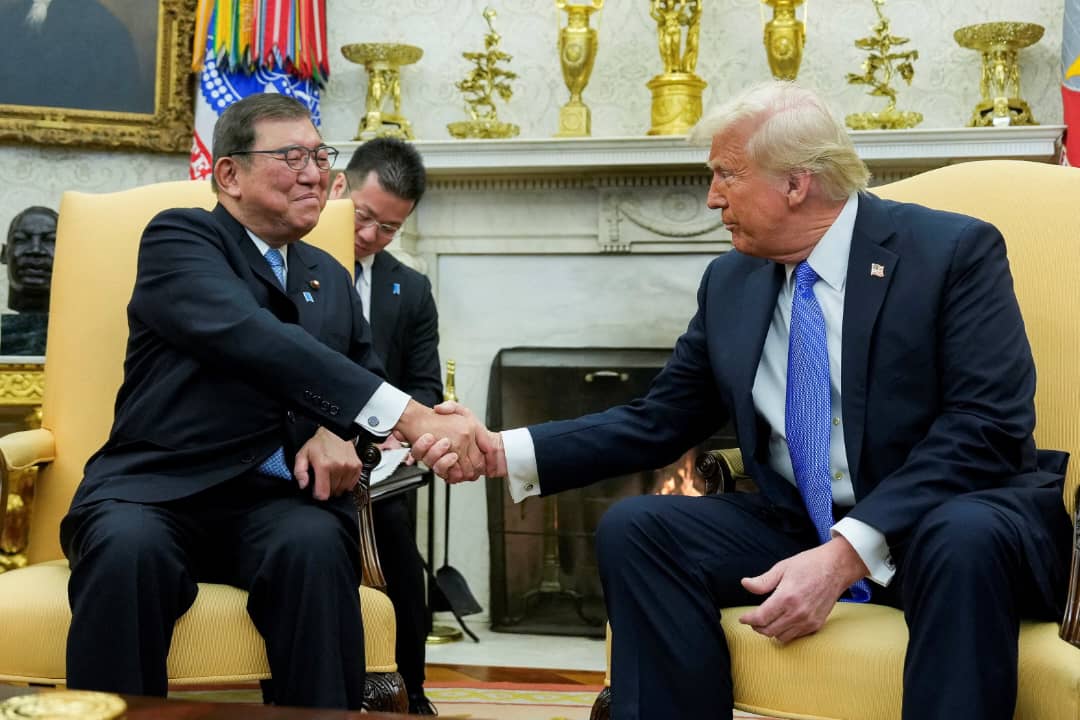
Japan’s Prime Minister Shigeru Ishiba has welcomed a fresh trade framework agreed upon with the United States under President Donald Trump, which reduces U.S. tariffs on Japanese imports from a proposed 25% to 15% .
This move comes alongside a $550 billion investment and loan commitment from Japan, aimed at boosting supply chains in sectors like semiconductors and pharmaceuticals, as well as raising U.S. agricultural and auto exports .
Under the arrangement, duties on Japanese-built cars and other items will fall to 15%, improving conditions for Japan’s key auto industry .
While tariffs on steel and aluminium remain at 50%, the easing on vehicles gave markets a boost.
The Nikkei 225 index climbed about 2.6–3.2% following the announcement, with shares of Toyota and other automakers surging more than 10% .
Ishiba called the agreement a result of rigorous discussions and said he sees benefits on both sides .
He also noted the deal would allow Japan to maintain safeguards for its agricultural sector while increasing U.S. imports .
Through the new terms, Tokyo will invest heavily in the U.S., with most of the project returns slated to stay Stateside .
Despite applause from Tokyo and Wall Street, some U.S. automakers voiced concerns that the deal favours Japanese manufacturers, as North American vehicle producers continue paying higher levies .
Domestically, Ishiba faces mounting political pressure. His Liberal Democratic Party recently lost control of both houses of Japan’s parliament, prompting public calls for his resignation.
Ishiba has said he will consider his future after reviewing the full details of the trade framework .
This agreement follows other U.S. frameworks with countries like the Philippines and Indonesia, part of President Trump’s push to finalise trade deals before triggering higher tariffs set to take effect on August 1 .