
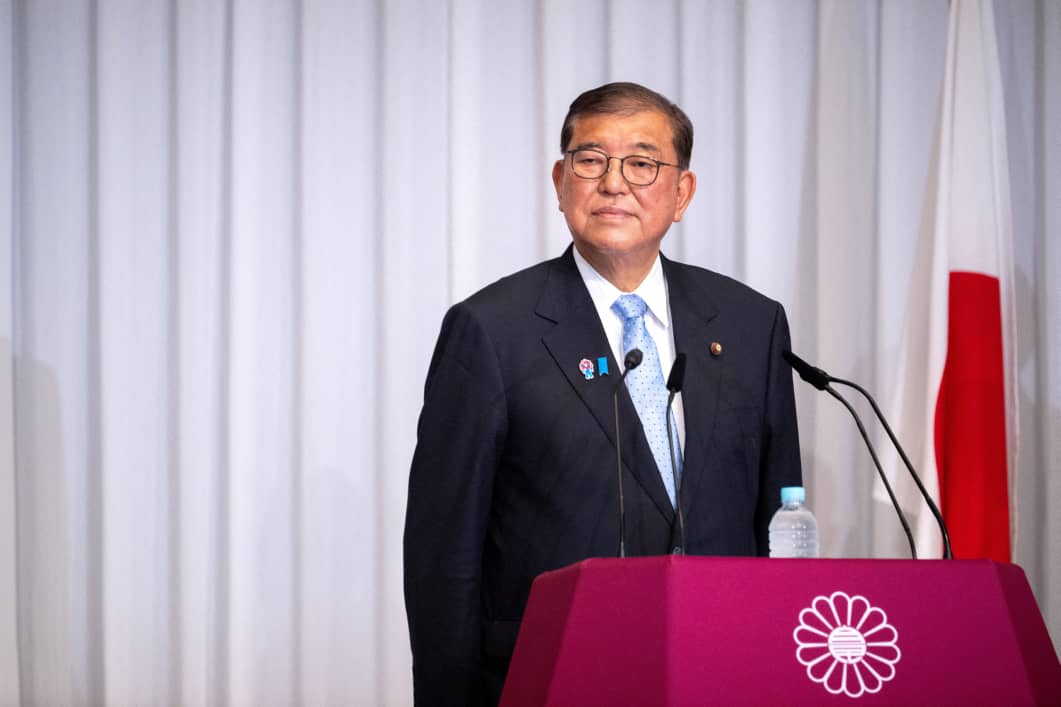
Japanese Prime Minister Shigeru Ishiba is considering whether to step down following his coalition’s defeat in Sunday’s upper‑house election and a newly announced tariff agreement with the United States.
His ruling Liberal Democratic Party (LDP) and partner Komeito lost their majority in the 248‑member upper chamber on July 20.
This marks the first time since 1955 that the LDP lacks control of either house of parliament, stacking pressure on Ishiba’s leadership .
Despite the setback, Ishiba postponed any immediate announcement to focus on the U.S. trade deal.
Under the agreement, Japan will invest roughly $550 billion in the United States in exchange for a reduction in auto tariffs—from the threatened 25 percent down to 15 percent—effective after an August 1 deadline .
The deal aims to shield Japan’s key industries from punitive duties and open U.S. markets to more Japanese goods while securing enhanced access for U.S. agricultural and auto exports .
Ishiba has denied reports of an immediate departure but has warned he may resign next month once the trade terms are fully defined. He told reporters he has made no firm decision and described resignation reports as “unfounded” .
Nevertheless, both media speculation and opposition voices expect his exit following a full review of the tariff pact.
Losing both houses has stripped Ishiba of legislative control, sparking internal calls for leadership renewal .
The rise of the far‑right Sanseito party, which won 14 upper‑house seats, also complicates the political scene.
It has capitalised on voter unhappiness over inflation, immigration, and what many saw as LDP missteps .