
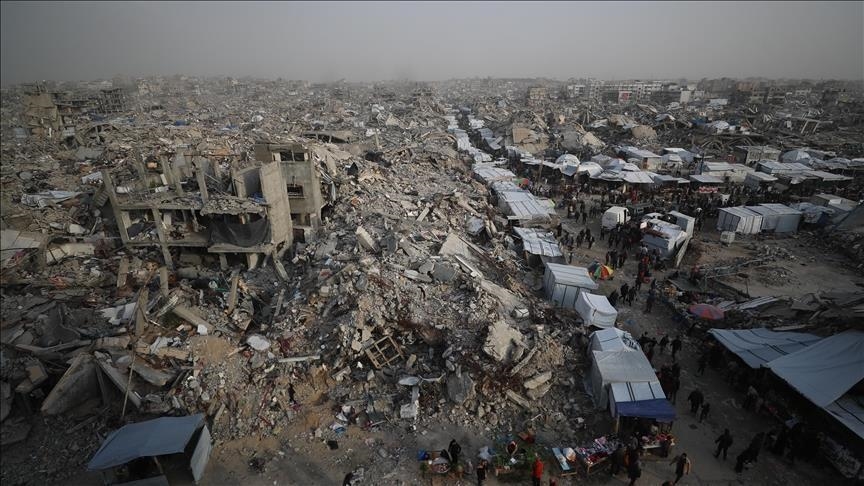
Israel has begun a large ground assault in Gaza following overnight airstrikes that left more than 100 people dead, according to local health officials.
The offensive has also led to the closure of the last working hospital in the northern part of the region, further worsening an already critical situation for civilians trapped in the conflict zone.
The new military push began on Sunday and is happening alongside a renewed round of indirect talks between Israel and Hamas. These discussions are being held in Doha, the capital of Qatar, with mediators from the United States, Qatar, and Egypt trying to guide both sides toward a ceasefire agreement. While some leaders have expressed cautious optimism, progress remains uncertain.
The recent escalation comes after Israel’s military leadership launched a campaign aimed at regaining control in key parts of Gaza. The operation, which they say will involve breaking up territory and moving civilians to avoid danger, is part of a broader strategy to weaken Hamas and secure the release of Israeli hostages. Israeli forces have described this as a necessary step to end the ongoing conflict.
Hamas has responded with mixed messages. A senior member of the group initially said they were willing to exchange several hostages for a ceasefire and the release of Palestinian prisoners. However, this claim was later denied by another Hamas leader, who insisted no such deal had been made. He said the group remains open to releasing hostages but only if Israel agrees to halt its military actions entirely and accepts international guarantees.
Negotiations have gained new momentum after a recent visit by U.S. President Donald Trump to the region. Trump did not visit Israel but held discussions in Doha, where he encouraged Arab partners and Hamas to rejoin talks. Since that visit, some movement has been seen, including the release of an Israeli-American hostage and a commitment from Yemen’s Houthi rebels to stop targeting U.S. ships in the Red Sea, although they vowed to continue resisting Israel.
As the fighting intensifies, the humanitarian crisis in Gaza deepens. Israel announced that it would allow a limited amount of food into the region to prevent widespread hunger. Officials said this step was taken to ensure the military campaign can continue without causing total collapse in civilian areas.
The future of the ceasefire talks remains unclear, especially as military operations expand. Israel’s position is that the war will end only if Hamas gives up entirely, a condition that the group is unlikely to accept. Meanwhile, civilians in Gaza face ongoing danger, with no clear end to the violence in sight.