
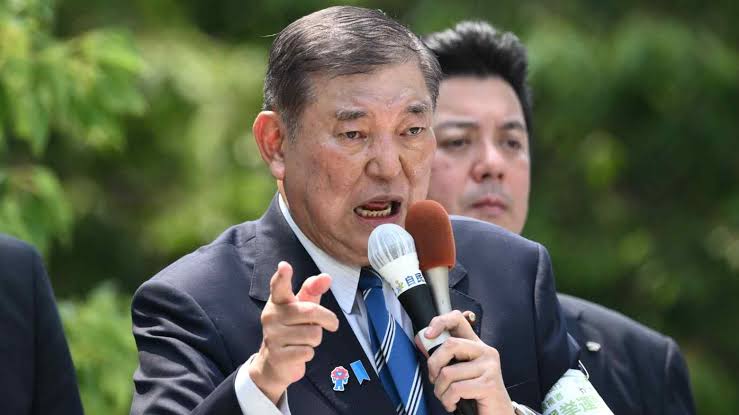
Japanese Prime Minister Shigeru Ishiba is heading into the July 20 upper house election under intense pressure.
His ruling coalition—comprising the Liberal Democratic Party (LDP) and Komeito—is projected to lose its majority.
While a defeat would not immediately topple the government, it would expose Ishiba’s weak hold on power and raise questions over his leadership and Japan’s political stability .
During the campaign, voters have grown increasingly concerned about the cost of living, with rising food prices like rice hitting households hard.
The government responded by releasing rice reserves, but the relief has been limited .
Polls indicate that issues like inflation, social security, and demographic shifts outrank trade disputes in voter priorities—only around 8% list tariffs as their top concern .
Still, the looming threat of 25–24% U.S. tariffs on Japanese goods places additional strain on the Kishida government.
Ishiba has responded with firmer rhetoric, now directly rebuking Washington, a notable shift in tone for Japan’s leader .
This diplomatic friction may sway undecided voters wary of economic fallout.
Financial markets are jittery ahead of the vote.
Japan’s government bonds are selling off and the yen has weakened, as uncertainty rises over possible shifts toward looser fiscal policy such as tax cuts or cash handouts .
Opposition groups—including centrist parties and right‑wing populists like Sanseito—are gaining modest ground.
However, the opposition remains fragmented, which may limit their effectiveness even if the coalition loses seats .
If Ishiba’s coalition falls short of 50 of the 124 seats up for grabs, some LDP insiders expect internal moves to replace him.
Still, experts say party leaders might hold off until after Japan secures a trade deal with the U.S., due by August 1 .