
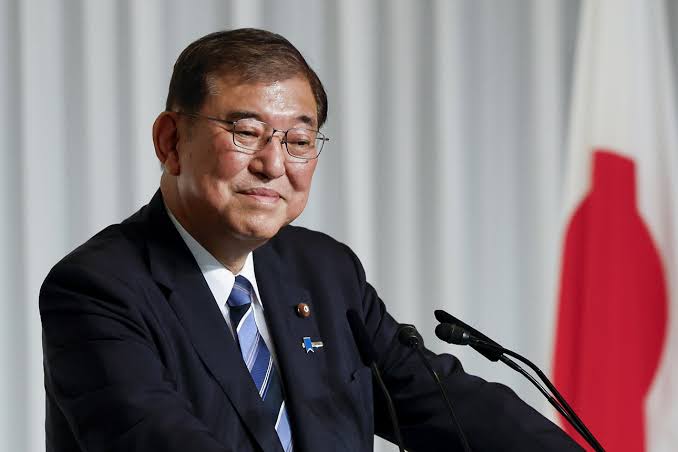
Japan’s Prime Minister Shigeru Ishiba pledged on Monday, July 21, 2025, that he will remain in office following his ruling coalition’s loss of its majority in the House of Councillors.
This defeat intensifies pressure on Ishiba after his Liberal Democratic Party (LDP) and junior partner Komeito also lost control of the more powerful lower house in an October 2024 election .
Despite securing only 47 of the 125 seats contested—three seats shy of retaining majority control over the 248-seat upper chamber—the premier emphasized his commitment to concluding crucial tariff discussions with the United States, slated before an August 1 deadline.
He stated that he would not step away in the middle of these negotiations or during efforts to tame rising living costs, including record-high rice prices .
However, the opposition took advantage of public dissatisfaction, campaigning on tax relief and tougher immigration policies.
Notably, the far-right Sanseito party—promoting anti-immigrant and nationalist rhetoric—made strong gains by winning 10–15 seats .
Analysts link these results to voters’ anger over inflation and stagnant incomes—and distrust in the LDP after a major slush-fund scandal .
Within the LDP, some senior members are calling for leadership change as party unity frays.
Lower house defeat followed by upper house losses leaves the coalition without control in either chamber—something unseen since 1955 .
Though the upper chamber cannot directly force a no-confidence vote, the imbalance may force more compromise and weaken Ishiba’s ability to push reforms without opposition support .
For now, Ishiba remains in place. But with internal dissent, growing opposition strength, economic troubles, and looming U.S. trade deadlines, his hold on power appears tenuous.
The coming weeks could determine whether he reshuffles his cabinet, forges new alliances, or faces a no-confidence motion .