
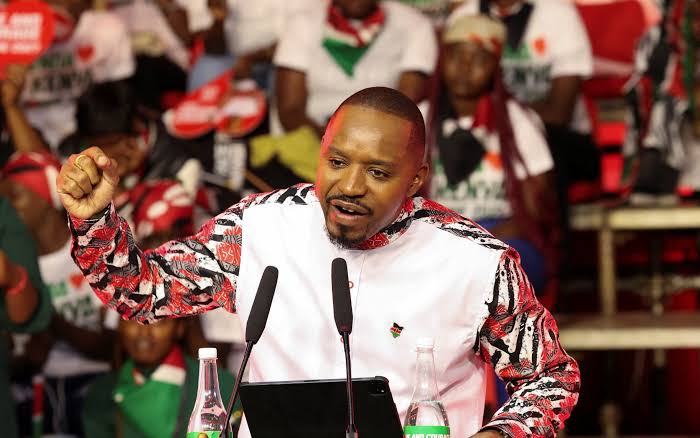
Prominent Kenyan social justice activist and government critic Boniface Mwangi has announced his intention to run for president in the 2027 elections.
Mwangi, 42, made the declaration on Wednesday, saying he hopes to transform years of street activism into an electoral movement.
His decision follows months of unrest in Kenya, where more than 100 people have died in anti-government protests since June last year.
The demonstrations, largely driven by young Kenyans, have focused on opposition to new taxes, corruption, and police brutality.
For over a decade, Mwangi has been at the forefront of Kenya’s protest movement, frequently clashing with authorities. He has faced arrest, tear gas, and threats while campaigning against corruption, impunity, and extrajudicial killings.
Rights groups, including Amnesty International and Human Rights Watch, have repeatedly criticised the government for excessive force during demonstrations and the use of terrorism charges against protest organisers.
In his announcement, Mwangi described Kenya as “broken” and in danger of sliding towards state failure.
He vowed to hold corrupt politicians accountable, promising mass arrests if elected, and pledged to build a “new Kenya” grounded in justice, democracy, and equity.
He stressed the need for leadership that prioritises ordinary citizens’ welfare and translates their aspirations into workable policies.
Mwangi’s presidential bid will face major hurdles. He must first be cleared by the Independent Electoral and Boundaries Commission (IEBC) to appear on the ballot.
He will also contend with powerful political rivals, including President William Ruto, who has already signaled plans to seek re-election.
Analysts say Mwangi’s campaign will test whether the energy of Kenya’s youth-led protest movement can evolve into a sustained political force.
The activist is no stranger to electoral politics. He unsuccessfully contested the Starehe parliamentary seat in 2017, running on a reformist platform.
While he lost, his campaign was praised for mobilising young voters and challenging the dominance of established political dynasties.
Kenya’s 2027 vote is expected to be fiercely contested, with early contenders already positioning themselves.
With nearly 70% of the population under 35, Mwangi’s candidacy could resonate with frustrated young Kenyans seeking an alternative to traditional politics.