
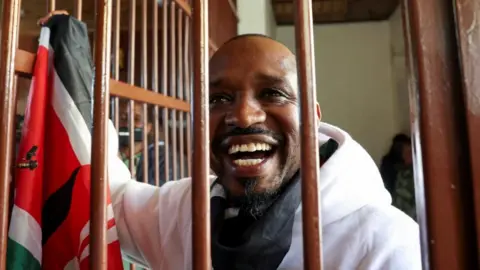
Boniface Mwangi, a prominent Kenyan human rights activist and government critic, was arrested on July 20 and brought before the Kahawa Law Courts in Nairobi a day later.
His arrest came amid rising public outrage following weeks of deadly anti-government protests.
Mwangi, known for his vocal stance against corruption and police brutality, was initially accused of facilitating terrorist acts—a claim that has since been dropped.
The initial charges sparked widespread backlash from civil society groups, who described the move as a way to silence dissent.
Mwangi’s arrest followed the death of blogger and activist Albert Ojwang, who reportedly died in police custody in June.
His death triggered a wave of nationwide protests calling for accountability, police reforms, and economic justice.
Although terrorism charges were initially announced, the prosecution reduced the case, instead accusing Mwangi of unlawful possession of ammunition.
Authorities say they found a blank round, three unused tear gas canisters, handwritten notes, and several electronic devices in his home. Mwangi and his legal team deny all allegations, stating the items were either planted or unrelated to any violent activity.
Over 100 people are reported to have died in recent weeks during demonstrations sparked by tax hikes, unemployment, and widespread allegations of police misconduct.
Youth-led protests, particularly active on social media under the “Gen Z” movement, have drawn thousands into the streets.
Police have responded with force, prompting criticism from local and international rights organisations.
Mwangi was released on bail shortly after his court appearance.
The Kenya Human Rights Commission, Amnesty International, and other observers have dismissed the charges as politically motivated.
They argue that the state is targeting high-profile voices to discourage protest and intimidate civil society.
The government under President William Ruto faces mounting pressure to investigate police violence and stop the criminalisation of peaceful protest.
Mwangi’s case remains under review, and he is expected to return to court as proceedings continue.