
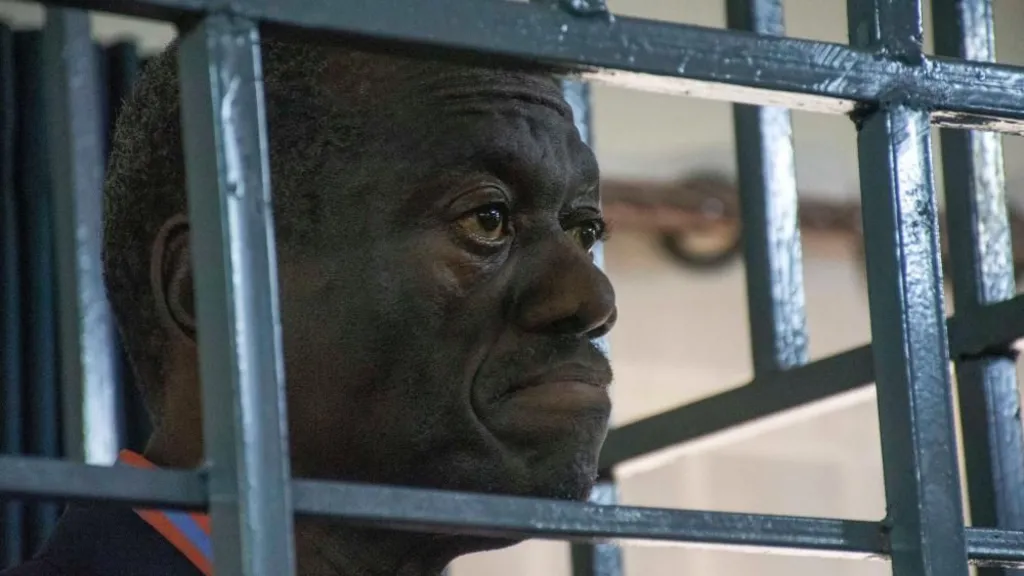
Winnie Byanyima, wife of detained Ugandan opposition leader Kizza Besigye, has criticized a ban on prison visits during the Christmas period as “cruel and inhumane,” raising concerns for her husband’s safety in custody.
Besigye, 68, is being held at Luzira Prison on charges of possessing pistols and attempting to purchase weapons abroad—allegations he denies. His trial in a military court has been postponed until January.
The Uganda Prisons Service announced a seven-day ban on visitors starting Christmas Eve, citing security concerns. Spokesperson Frank Baine Mayanja said the measure was intended to prevent potential prison breaks during the festive season.
“Christmas causes excitement, and majority of prisoners do not want to have Christmas inside. They must be planning on how to do a prison break,” Mayanja told local media.
Byanyima, a prominent diplomat and head of the UN agency tackling HIV and AIDS, said she plans to defy the ban and camp outside the prison to deliver food and see her husband.
“I’m not leaving Besigye’s food at the gate. I will go there and see my husband because I don’t trust them with him even for a single day,” Byanyima told the BBC. She expressed fears for her husband’s well-being, describing his confinement in a “tiny little room” behind six gates.
The veteran opposition leader, who has unsuccessfully contested four presidential elections against President Yoweri Museveni, was abducted in Kenya last month and forcibly returned to Uganda before being charged.
This is the second time Besigye has spent Christmas in prison. In 2005, he was arrested ahead of the 2006 elections and charged with treason, though the charges were later dismissed.
Besigye has objected to being tried by a military court, arguing that as a civilian, he should face trial in a civilian court. The Ugandan government has defended military trials for cases involving firearms, despite criticism from opposition parties and a Constitutional Court ruling against the practice.
Byanyima also questioned recent leadership changes at Luzira Prison, describing the appointment of a “young and inexperienced” official as suspicious. “I do not trust his [Besigye’s] life with those who abducted him,” she said.
Mayanja dismissed her concerns, urging her to trust the authorities. “We have the means and mechanisms of keeping him alive,” he said.
Critics have long accused Museveni’s government of using the judiciary and security forces to suppress political dissent, allegations the government denies. Museveni, who has ruled Uganda since 1986, claims his policies have ensured stability.