
A wave of drone and missile attacks hit Kyiv on Saturday, injuring at least eight people and causing fires across the capital just as Ukraine and Russia began the first phase of a major prisoner swap.
The strikes triggered explosions across several neighborhoods overnight, with emergency crews responding to burning debris scattered throughout the city.
The timing of the assault coincided with the start of a long-anticipated prisoner exchange, involving 1,000 captives on each side. The initial phase saw 390 individuals released by both countries, including soldiers and civilians. Ukrainian President Volodymyr Zelensky confirmed the operation had begun and was expected to continue through the weekend.
While Ukraine’s air defenses managed to intercept many of the incoming projectiles, damage on the ground highlighted the persistent danger from Russia’s continued missile campaign. Local officials confirmed that two of the wounded in Kyiv were taken to hospital, while others received treatment for minor injuries. Civil defense systems remained on high alert throughout the day.
The Russian military claimed it had been the target of nearly 800 Ukrainian drones and missiles over the past several days, asserting that most were successfully intercepted. These claims have not been independently verified. In return, Russia admitted to launching the attack on Kyiv as part of what appears to be an escalating cycle of strikes and retaliation.
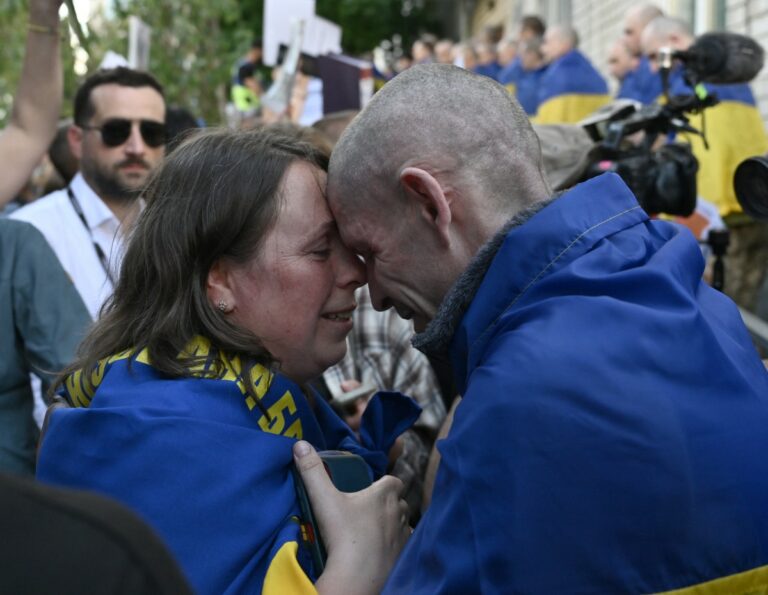
Meanwhile, emotions ran high at a hospital in the northern Chernihiv region, where some of the freed Ukrainian soldiers were taken. Thin and visibly worn down, many of them smiled and waved as they stepped off buses to tearful reunions with family members. Wrapped in Ukrainian flags, the soldiers were embraced by relatives who had waited months—or in some cases, years—for news.
The exchange is the largest since Russia’s full-scale invasion in 2022 and was arranged during low-level talks in Istanbul last week. Though the negotiations failed to achieve a ceasefire, both sides agreed to carry out the prisoner swap in stages. Russia also signaled it would present its conditions for a potential peace deal following the completion of the exchange, though it gave no details about those terms.
The news of the swap drew international attention, including from U.S. President Donald Trump, who congratulated both countries and hinted that the deal could pave the way for further progress toward peace. Despite his repeated claims that he could end the war quickly, efforts to broker a formal ceasefire have yet to succeed.
For the families of missing Ukrainian soldiers, the wait continues. Some clutched photos of loved ones as they searched for familiar faces among the newly released captives. One mother said her son had disappeared two years ago in Bakhmut and she still hoped he was alive. She joined others standing outside hospitals and military bases, watching each arriving bus with cautious hope.
Experts estimate that thousands of Ukrainian prisoners remain in Russian custody, with the total likely between 8,000 and 10,000. Ukrainian officials said that each exchange sometimes includes people who had not been previously confirmed as captured, offering hope for many families who still don’t know the fate of their relatives.
Though the full list of those released has not yet been made public, the scope and coordination of this swap mark a rare moment of cooperation in a conflict that has largely been defined by destruction and deadlock. Whether this exchange leads to a broader diplomatic breakthrough remains uncertain. For now, the focus remains on bringing people home—one busload at a time.