
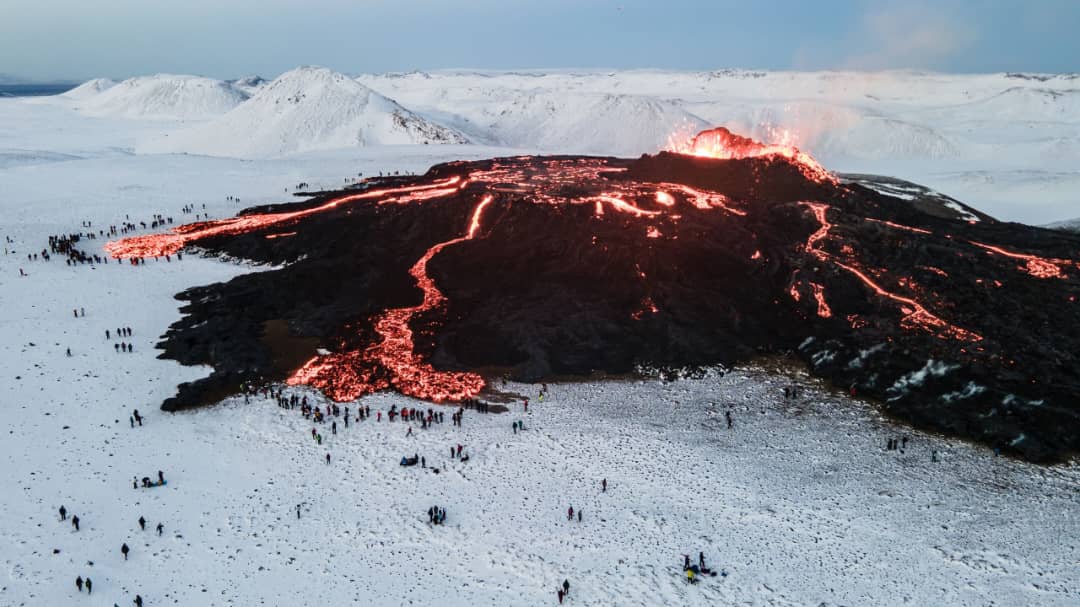
A new volcanic eruption occurred in Iceland during the early hours of July 16, 2025, as molten lava burst through a long crack on the Reykjanes Peninsula, not far from the capital, Reykjavík.
This latest event is the twelfth eruption in the region since volcanic activity resumed in 2021 and the ninth linked to the Sundhnúkur crater row since late 2023.
The eruption began just before 4 a.m. local time, following a series of small earthquakes.
According to the Icelandic Meteorological Office, a fresh fissure formed in the Earth’s crust, stretching between 700 and 1,000 meters.
From this opening, streams of glowing lava spilled out and moved toward uninhabited areas.
Authorities quickly evacuated the coastal town of Grindavík, which had already been largely deserted after previous volcanic activity in 2023.
Tourists and staff at the popular Blue Lagoon spa and nearby campsites were also evacuated. Around 100 people were safely relocated.
Air travel was not affected, as no significant ash was released into the atmosphere and Keflavík Airport remains open.
Officials report that the eruption is moderate in scale, and the lava flow has stabilized. While tremors have decreased, experts are closely observing gas levels to assess any risks to nearby areas.
This eruption is part of a broader pattern of renewed geological activity along the Reykjanes Peninsula, a region located on the Mid-Atlantic Ridge where tectonic plates slowly drift apart.
After centuries of dormancy, the area has entered a phase of recurring eruptions that scientists believe could continue for many years to come.