
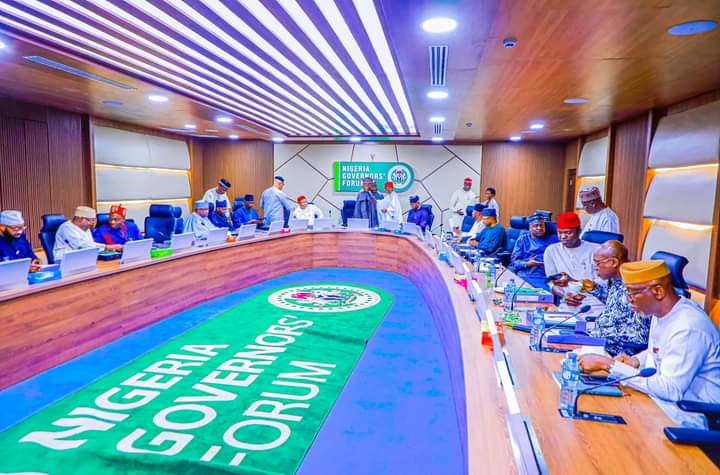
By Abasi Ita, Calabar
Indications are rife that the the Federal Government and state governors may have endorsed a three-month moratorium on Local Government autonomy thereby delaying the effective implementation of the judgement till October this year.
The twist is sequel to growing concerns arising from its impact of the judgement on salary payments and operational effiency.
Findings by the Summit Post News unearthed that the moratorium is meant to afford ample time for parties involved to streamline modalities for payment of salaries, ensuring adequate fundings for operational cost and other sundry matter to avoid imminent collapse of the system especially in states with no elected council officials.
With the latest development Local Governments may have to wait till October before the implementation of the law enforcing direct payment into their respective accounts.
Recall that the Supreme Court, had on July 11, 2024, gave a landmark judgment affirming the financial autonomy of the 774 LGs in the country and ruled that governors could no longer control funds meant for the councils.
In the historic verdict,the apex court also directed the Accountant-General of the Federation to henceforth pay LG allocations directly to their accounts, as it declared the non-remittance of funds by the 36 states unconstitutional.
During President Muhammadu Buhari, the Nigerian Financial Intelligence Unit had also issued a regulation, effective from June 1, 2019, which banned transactions on State and Local Governments Joint Accounts.
Funds were supposedly sent directly to the accounts of the local governments. It also limited cash withdrawals from local governments accounts to a maximum amount of N500,000 per day with penalties for banks that failed to comply.
The directive did not argur well with the Nigerian governors under the aegis of the Nigerian Governors’ Forum as they kicked against this regulation and the NFIU eventually capitulated.
The status quo was maintained until May 2024 when the Attorney-General of the Federation, Lateef Fagbemi (SAN), filed suit marked SC/CV/343/2024 at the Supreme Court to strengthen the autonomy of the local government areas as guaranteed by the constitution.
The suit also sought to prevent state governors from unilaterally dissolving democratically elected local government councils and establishing caretaker committees, actions that violate constitutional provisions.
The AGF opined that the constitution mandates a democratically elected local government system and does not allow alternative governance structures.
The suit also prayed that the funds from the Federation Account be channelled directly to local governments, bypassing the allegedly unlawful joint accounts regulated by state governors.
The Federal Government also sought a court injunction to restraint governors and their agents from receiving or spending local government funds without a democratically elected local government system in place. It contended that the governors’ failure to facilitate the emergence of elected council system constitutes a deliberate subversion of the 1999 Constitution. The Supreme Court heard parties to the case on June 13, with the state governments, through their respective attorneys-general, opposing the suit.
That was the prelude to the Supreme Court judgment of last Thursday, July 11, 2024, which has now affirmed the financial autonomy of Nigeria’s 774 local governments. In the unanimous judgment of its seven-member panel, the Supreme Court upheld the suit brought by the federal government to strengthen the independence of local governments in the country.
A member of the panel, Emmanuel Agim, who delivered the court’s lead judgment, held that the local governments across the country should henceforth receive their allocations directly from the Accountant-General of the Federation. He ruled that it is illegal and unconstitutional for governors to receive and withhold funds allocated to local government areas in their states.
Teeming Nigerians, including the LG chairmen, hailed the judgment of the Supreme Court, describing it as a step in the right direction to restructure the country.
However, despite concerns raised by some governors, the Nigeria Governors’ Forum, through the chairman and Kwara State Governor, AbdulRahman AbdulRazaq, disclosed the judgment was a relief from the financial burden to state governments.