
By Aaron Mike Odeh
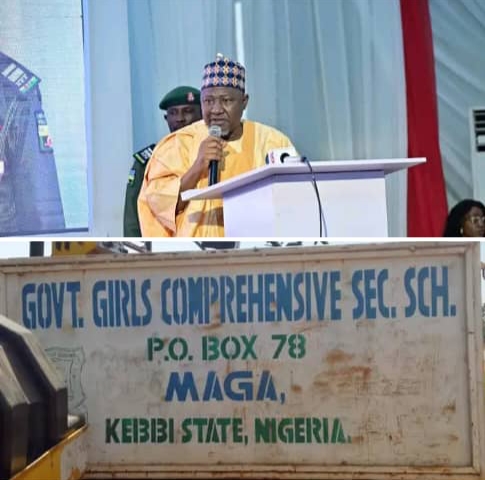
Kebbi State has been thrown into anxiety since the heartbreaking abduction of schoolgirls—an incident that has once again underscored the fragility of Nigeria’s security architecture and the emotional toll insecurity continues to inflict on families. As panic and uncertainty ripple across affected communities, one political figure has risen with unusual urgency and unwavering resolve: Distinguished Senator Garba Musa Maidoki, representing Kebbi South Senatorial District.
In a period where silence, denial, or distant commentary often characterizes political response, Senator Maidoki has instead walked into the storm—driving an intense grassroots mobilization strategy and galvanizing security agencies into a coordinated intelligence operation aimed at securing the quick recovery of the abducted girls. His actions have not only sparked hope among grieving families but have also positioned him as one of the most responsive political figures in the Northwest at this defining moment.
A Senator at the Center of a Devastating Crisis
The abduction sent shockwaves across Kebbi, a state known for its peaceful lifestyle and communal cohesion. Parents have been left shattered, communities frightened, and public confidence shaken. In such a climate, many looked to political leaders for guidance, reassurance, and direction.
Senator Maidoki’s entrance into the crisis was swift and decisive. From the first 48 hours, he was physically present among the affected families, meeting with traditional rulers, community elders, youth mobilizers, local vigilante groups, and religious leaders. His consistent message was clear: “We must not wait for rescue—we must collaborate to make it happen.”
For many locals, his presence alone soothed anxieties. For others, his insistence on urgent action reignited a sense of purpose. In a political environment often criticized for sluggish response, Maidoki’s direct engagement became a refreshing departure from the norm.
Grassroots Mobilization as a Political Strategy
What sets Maidoki apart is his conviction that the community is the first line of defense in intelligence gathering. He understands that no security agency, no matter how well equipped, can succeed without community cooperation. Thus, he activated a layered mobilization structure that drew from multiple grassroots power centers.
He met with:
District and village heads
Women community leaders
Local hunters and vigilante groups
Youth surveillance volunteers
Fulani and farmers’ associations
Religious institutions and clerics
Each meeting was strategic, aimed at building a unified intelligence-sharing network. He encouraged residents to report suspicious movements, track strange newcomers, monitor forest routes, and strengthen nocturnal surveillance in vulnerable settlements.
His political ability to inspire trust quickly fostered a cohesive culture of vigilance. Many residents who previously feared retaliation for supplying information now feel emboldened, assured by the Senator’s visible backing and the structured linkages he has established with security agencies.
Building Bridges Between Security Agencies and Communities
One of the biggest obstacles to effective intelligence operations in Nigeria is the historic mistrust between communities and security operatives. Maidoki recognized this and worked deliberately to remove the barriers.
He summoned a series of meetings involving the police, the military, DSS operatives, Civil Defence officials, and local vigilantes. In each, he emphasized that cooperation must be fluid and devoid of rivalry. He pushed for real-time communication, joint patrols, shared logistics, and coordinated emergency response.
Security agencies have since acknowledged the improved intelligence flow. With community youth volunteers now acting as the “eyes and ears” of the region, information reaches operational commanders faster, enabling more timely deployment of search units into critical terrains where abductors may pass or hide.
Political Courage in a Time of National Uncertainty
Nigeria’s political climate is often characterized by carefully measured statements, especially on sensitive security matters. Yet Senator Maidoki has chosen the path of boldness—not recklessness, but a politically courageous insistence that the rescue efforts must be intensified at every level.
In Abuja, he has become a strong voice pressing for:
Enhanced deployment of tactical rescue teams
Use of advanced intelligence technologies
Aerial surveillance over forest corridors
Increased federal funding for emergency operations
A multi-agency joint task force for the Kebbi crisis
His interventions have been strategic, not antagonistic. Rather than politicizing the crisis, he has framed it as a moral and constitutional duty of government to protect the lives of its citizens. This balanced yet firm political engagement has earned him respect across party lines, with many describing him as “one of the few senators who understands the politics of security without trivializing national trauma.”
Restoring Hope Among the Families
The emotional toll on the families of the kidnapped girls cannot be overstated. Many have not slept peacefully since the incident. Mothers gather at dusk in silent prayer circles; fathers patrol nearby bushes in desperate hope. It is in these fragile emotional spaces that the Senator has become a stabilizing force.
He has visited families repeatedly, offering updates, encouraging them, and assuring them of ongoing rescue operations. He has insisted that no parent should be left in the dark, no matter how sensitive the intelligence may be. In doing so, he has rebuilt the trust that many families initially lost in government institutions.
For some parents, his reassurance has been the only psychological lifeline during this dark moment.
The Political Weight of Leadership in Crisis
Leadership in times of crisis is often remembered long after the crisis itself. In Kebbi, many residents believe that Maidoki has demonstrated what true political representation should look like—leaders who do not hide behind security reports but take active roles in shaping them.
His coordination of grassroots efforts has transformed passive fear into active vigilance. His engagement with security agencies has created a more coherent rescue framework. His advocacy at the national level has ensured the crisis receives the attention it deserves.
Through all this, he has remained humble, approachable, and focused. He has neither blamed nor politicized. Instead, he has worked—relentlessly.
A Template for Other Leaders
Security remains one of Nigeria’s gravest challenges. The strategy championed by Senator Maidoki shows that community-based intelligence, when combined with committed political leadership, can strengthen security operations in meaningful ways.
His approach offers lessons:
That intelligence begins at the grassroots.
That communities and security agencies must collaborate.
That leaders must be present, not distant.
That communication restores hope during crisis.
That political pressure can accelerate action.
In a time when fear could easily divide communities, his methodology has united them around a common goal: bringing the girls home safely.
Conclusion: A Senator Who Has Chosen to Stand With His People
In moments of tragedy, political leadership can either fracture or inspire. Senator Garba Maidoki has chosen inspiration. He has demonstrated that governance is not merely about legislative duties in Abuja but about standing with one’s people in their darkest hour.
His mobilization of grassroots networks, reinforcement of security collaborations, and tireless push for national-level action have breathed new energy into the search for the abducted girls. More importantly, they have reassured Kebbi State that even in the face of terror, leadership can be bold, compassionate, and committed.
As the rescue mission intensifies, one truth is clear:
Senator Garba Maidoki has risen as a beacon of responsive leadership—a leader who refuses to watch from afar but chooses to lead from the frontline for the safety and dignity of his people.
Aaron Mike Odeh, A Public Affairs Analyst and Community Development Advocator, write from Post Army Housing Estate Kurudu Abuja