
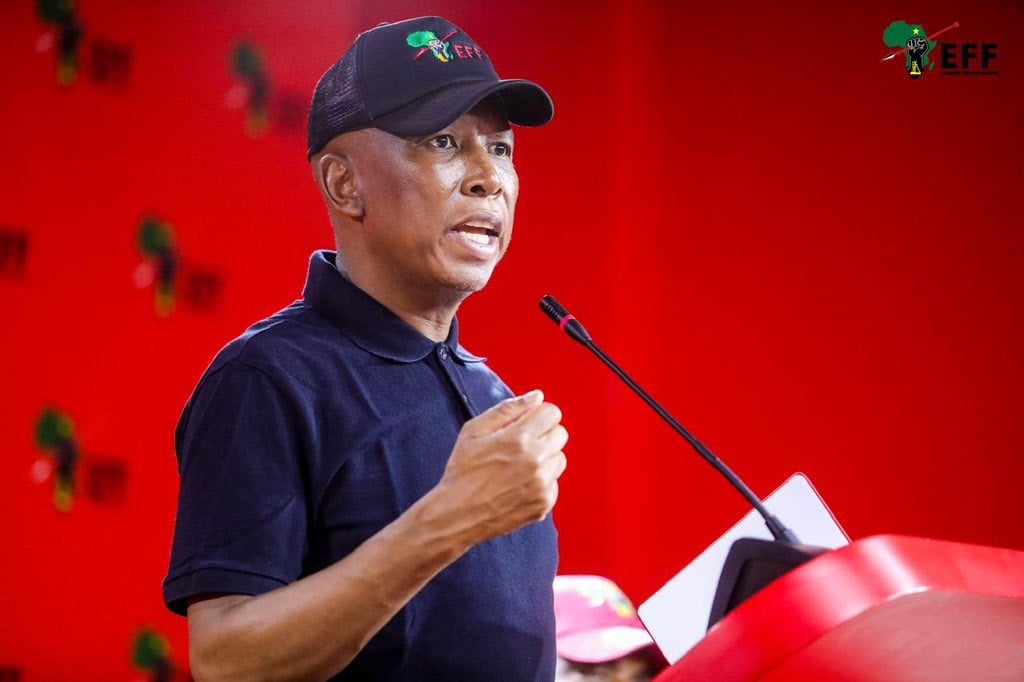
President Cyril Ramaphosa’s planned visit to the United States this week has sparked fierce criticism from Economic Freedom Fighters (EFF) leader Julius Malema, who says the trip comes at the worst possible time for South Africa.
Ramaphosa is set to travel to the US from Monday through Thursday. During the visit, he is expected to meet with President Donald Trump and engage in talks aimed at improving diplomatic ties. But back home, the timing of his trip has raised eyebrows, especially as Parliament is preparing to receive the national budget for the third time—an unusual move that signals deep financial strain.
Malema argues that the President’s absence during such a crucial week reflects a disregard for the country’s economic challenges. With the Finance Minister scheduled to deliver the revised budget on Wednesday, Malema questioned why Ramaphosa would prioritize foreign diplomacy over domestic accountability.
The EFF leader also warned that Ramaphosa could return from the US having made concessions that could undermine South Africa’s core principles. He believes the visit will achieve little more than weakening the country’s stance on critical global issues in exchange for Western approval.
Malema has also taken aim at what he sees as the President’s willingness to override decisions made by Parliament. One key concern is the parliamentary resolution calling for the closure of the Israeli embassy in South Africa—a decision Malema fears Ramaphosa may choose to ignore during his foreign engagements. He cautioned that bypassing Parliament’s authority would be unlawful and met with resistance.
In addition to his critique of the US trip, Malema dismissed recent claims that nearly 50 white South Africans had fled the country due to rising violence. He called the reports exaggerated and baseless, suggesting they were part of a larger narrative designed to stir panic and draw sympathy from the international community.
He questioned why, if the claims were true, the abandoned farms mentioned in the reports hadn’t been claimed or redistributed—highlighting the ongoing debate around land reform and ownership. Malema used the moment to reinforce the EFF’s position on land redistribution, insisting that the party seeks fairness, not violence.
According to him, South Africans of all backgrounds should have equal access to land, and efforts to paint this as a threat are rooted in fear, not fact. He rejected the notion that white citizens are being targeted, stating that the EFF’s message is about shared ownership and collective progress.
As Ramaphosa heads to Washington, the political temperature at home continues to rise. With budget uncertainty, land debates, and foreign policy all colliding in the same week, the President returns to a country that is watching closely—and not without criticism.