
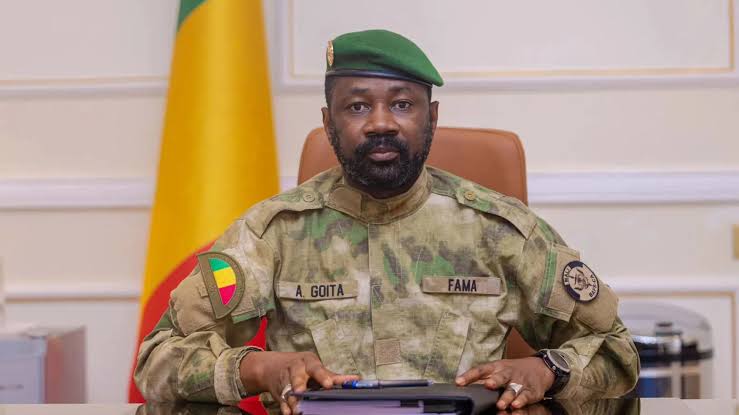
Five years after seizing power in a coup, Mali’s military rulers remain entrenched despite early promises of a quick transition to civilian government.
Led by General Assimi Goita, the junta has reshaped the country’s foreign partnerships and claimed military victories, but insecurity and political uncertainty persist.
After initially promising an 18-month handover, Goita consolidated control by removing the transitional leadership and positioning himself as president.
His central pledge was to defeat armed insurgents and reduce reliance on foreign powers. French troops, once central to Mali’s counterinsurgency campaign, have since departed, replaced by Russian paramilitary forces.
The military declared victory in Kidal, a northeastern stronghold, but rights groups accused fighters allied to the junta of abuses against civilians.
Beyond that, much of the countryside remains contested, and insurgents continue to hold towns and civilians hostage.
On the political front, Mali withdrew from the West African bloc ECOWAS after tensions over election delays.
In its place, Bamako joined Niger and Burkina Faso, also ruled by juntas, to form the Alliance of Sahel States.
The three governments are pushing to create a federation that reduces French influence while expanding ties with Russia, Turkey, China, Iran and North Korea.
While the junta has succeeded in reshaping Mali’s foreign alliances, its original promise of restoring security and democratic rule remains far from fulfilled.
Civilians continue to face conflict, instability and economic hardship, with little sign of a political transition.