
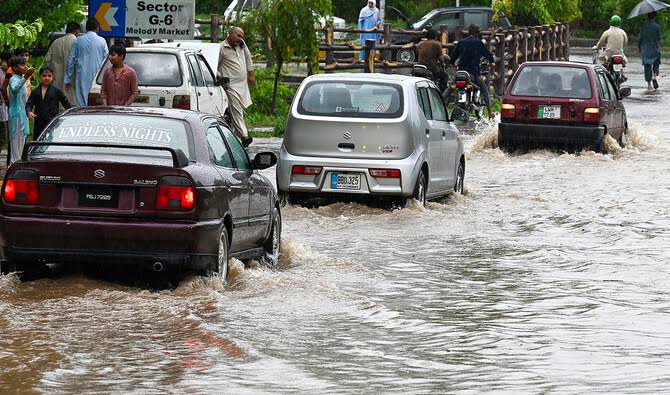
Heavy monsoon rains have caused devastating floods across eastern Pakistan, particularly in Punjab, claiming dozens of lives and affecting thousands.
The downpour, which began in late June, intensified over the past few days, bringing widespread damage to homes, roads, and farmland.
Between Thursday, July 17 and Friday, July 18, at least 63 people died due to flood-related incidents.
Most of the deaths occurred in Punjab, where rainfall was nearly double the average compared to the same period last year.
The Pakistan Meteorological Department reported an 82% increase in rainfall nationwide this month, with the Punjab region seeing a 124% rise.
Since June 26, almost 200 people have died in various parts of the country.
In response, authorities have put emergency measures in place.
Section 144 has been enforced, which bans swimming, bathing, and boating in open water bodies such as rivers, lakes, canals, and ponds to prevent further accidents.
Rescue operations are ongoing in flooded areas. In Rawalpindi, army helicopters were used to rescue stranded families from rooftops after flash floods struck homes near the Sawan River.
Meanwhile, the Provincial Disaster Management Authority reported medium-level flooding in Kalabagh on the Indus River and low-level flooding in other areas.
Tourists have been advised to avoid travel to regions prone to landslides and blocked roads due to heavy rain.
In Lahore, light to moderate showers continued, raising concerns about urban flooding.
Pakistan’s disaster management agencies are warning of more heavy rain in the coming weeks.
The National Disaster Management Authority has forecast another spell of monsoon rain lasting at least seven days, with further downpours expected through August.
The 2022 floods serve as a harsh reminder of what these rains can bring.
Authorities are urging the public to stay alert and follow safety instructions.