
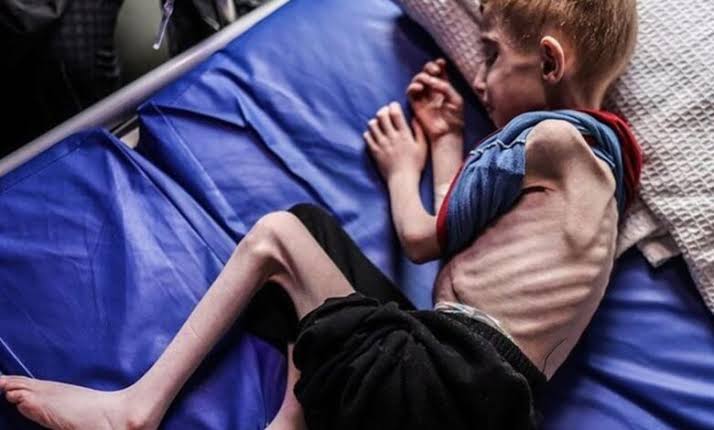
The health ministry in Gaza, managed by Hamas, has reported 11 more deaths linked to malnutrition, bringing the total to 212 since the war began.
Nearly half of those who died were children, with 98 reported so far.
In the last 24 hours, at least 38 more people have been killed and nearly 500 injured during Israeli military strikes, according to the same source.
At the same time, Israel has announced a new plan to take full control of Gaza City, with a two-month deadline for evacuation set to end on October 7, 2025 — marking two years since the war began.
The Israeli security cabinet approved this strategy, which aims to relocate about one million residents further south.
The plan has drawn widespread criticism, including from some inside Israel.
Families of hostages and military officials have voiced concerns, while many international groups have warned of more civilian suffering.
Israel says it will continue its course despite these concerns.
Gaza City, once home to 600,000 people, now holds many more due to ongoing displacement during the conflict.
Many live in makeshift shelters or damaged buildings.
Reports say Israel plans to move the population to the already overcrowded al-Mawasi camp in southern Gaza.
Aid groups and the UN say people in Gaza are already struggling to survive. Access to food, water, and basic supplies remains limited.
The UN says aid delivery is being slowed by delays at Israeli-controlled checkpoints.
Israel blames the UN for failing to pick up aid and denies that famine is occurring.
According to Gaza’s health ministry, 21 people were killed while trying to collect aid in just one day.
The UN estimates over 1,300 Palestinians have died trying to access food since late May.
Most of these deaths reportedly occurred near aid sites or along delivery routes.
Israel claims Hamas creates chaos around aid areas. Independent reporting from Gaza remains restricted.
The Israeli prime minister’s office says aid will be provided outside combat areas, but details are unclear.
As with earlier evacuations, families may once again be forced to flee on foot, by cart, or in packed vehicles.