
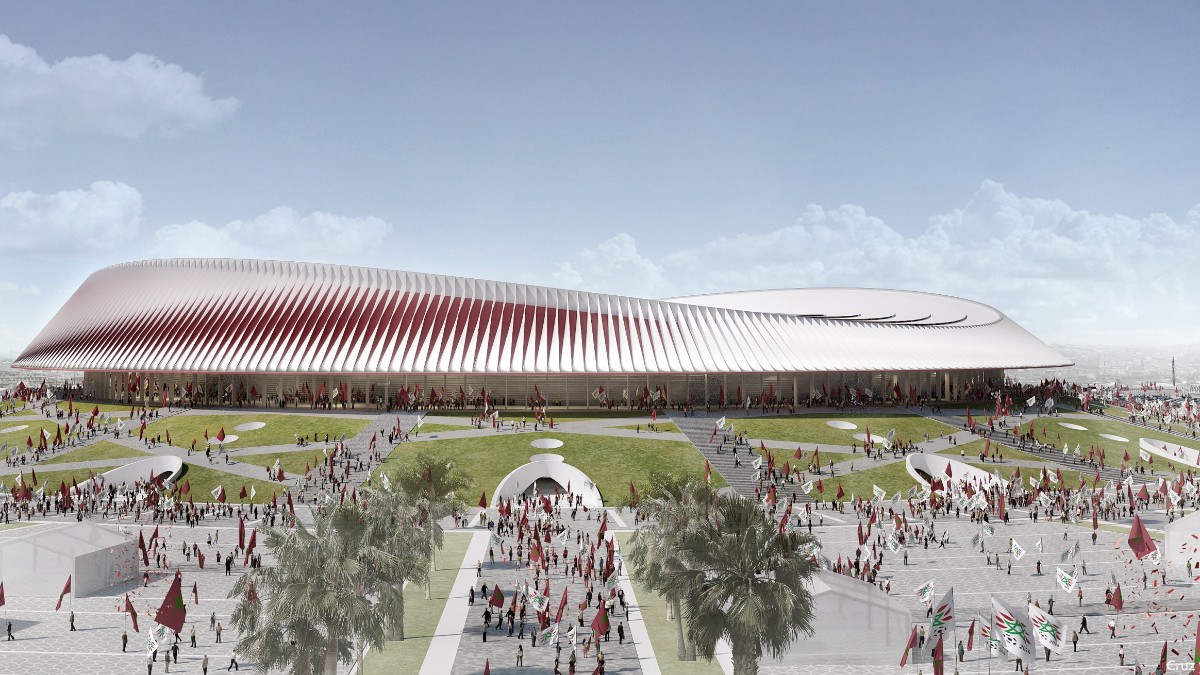
Morocco is taking bold steps to bring the 2030 FIFA World Cup final to its soil by building what is set to become the world’s largest football stadium.
The move comes as part of a joint hosting bid with Spain and Portugal, but Morocco is pushing hard to ensure the most prestigious match of the tournament takes place in Africa, not Europe.
The decision to build this mega-stadium comes at a time when Spain’s football leadership is facing serious troubles. Just recently, Spain’s Civil Guard raided the Royal Spanish Football Federation’s offices in connection with alleged corruption and irregularities during the tenure of former president Luis Rubiales. While these investigations do not threaten the hosting rights for the World Cup itself, they may weaken Spain’s chances of hosting the final match.
To tip the scales in its favor, Morocco is developing an extraordinary 115,000-seat stadium, which will be located in El Mansouria, about 38 kilometers north of Casablanca. This new facility will sit on a 100-hectare site and will be part of a larger sports and leisure complex. The project is led by the Spanish architecture firm Cruz y Ortiz, along with UK-based Populous and the Franco-Moroccan team Oulalous+Choi.
With the current largest football stadium in the world—North Korea’s Rungrado 1st of May Stadium—holding 114,000 spectators, Morocco’s new arena will officially take the top spot. It will also surpass the capacities of the newly renovated Camp Nou and Santiago Bernabéu stadiums, as well as Qatar’s Lusail Stadium, which hosted the 2022 World Cup final.
The stadium is not just about size. Its design draws from Moroccan traditions, inspired by the community gathering known as the moussem. The structure will feature a canopy-style roof and come equipped with an athletics track, swimming pool, shopping areas, and a hotel. The entire project carries a projected cost of 5 billion dirhams, or around €459 million.
Morocco is not new to football ambition. Its largest stadium so far is the Mohamed V Stadium in Casablanca, which holds 67,000. But the upcoming project will nearly double that size, reflecting the country’s growing influence on the international football stage.
There are still six years to go before the 2030 World Cup kicks off across three continents. With early matches set to be played in Argentina, Uruguay, and Paraguay to mark the 100th anniversary of the first World Cup, the final match remains a symbolic prize. Morocco is clearly all in, hoping to leave a lasting impression and bring the final to Africa for the first time.