
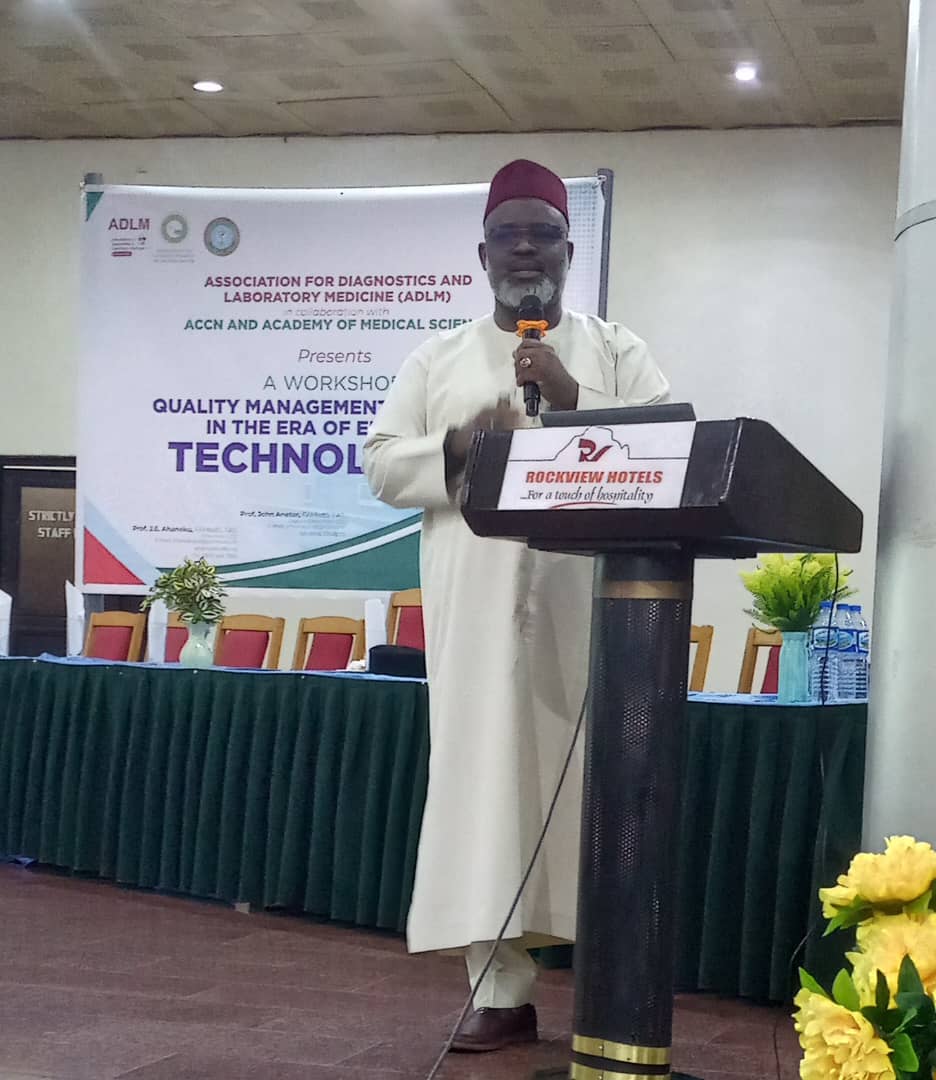
The Director-General of the National Blood Service Agency (NBSA), Professor Saleh Yuguda, has called attention to Nigeria’s persistent shortage of safe blood supply and the urgent need for coordinated interventions to strengthen the nation’s blood system. He made this known while presenting a paper at a workshop jointly organized by the Association for Diagnostic and Laboratory Medicine (ADLM), ACCN, and the Academy of Medical Science on Quality Management Strategies in the Era of Emerging Technology, held on Thursday at Rockview Hotel, Abuja.
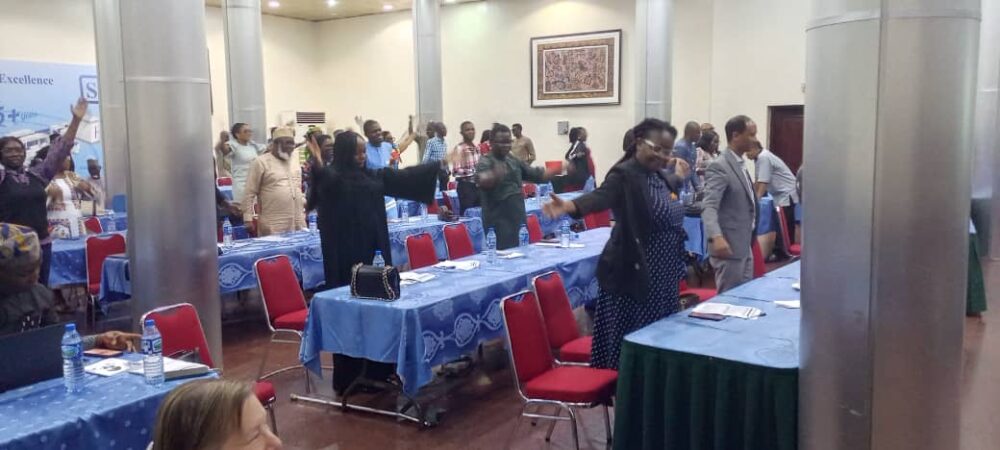
The workshop convened leading healthcare professionals, policymakers, and laboratory scientists from across the country to deliberate on how emerging technologies can enhance the quality and efficiency of healthcare delivery in Nigeria.
In his presentation titled “Blood Banking Practices in Nigeria,” Professor Yuguda noted that the country collects less than 30 percent of its national blood requirements, describing the situation as a major constraint to quality healthcare delivery.
“Nigeria faces a severe shortage of blood compared to other developed nations,” he said. “Most of our health indices, including maternal mortality, are adversely affected by this shortage. The demand for blood is consistently high, yet the supply remains dangerously low.”
Professor Yuguda commended the Federal Government’s ongoing reforms in the health sector under the leadership of the Coordinating Minister of Health and Social Welfare. He highlighted that the National Health Sector Reform Investment Initiative (NHSRII) was launched to address structural gaps and reduce maternal mortality through interventions such as the free emergency obstetric care program for all Nigerians.
> “Blood is central to many of these initiatives,” the DG emphasized. “Without adequate and safe blood, the Federal Government’s health interventions cannot achieve the desired impact. This is why the National Blood Service Agency was established—to regulate, coordinate, and license all blood establishments across the country.”
Professor Yuguda also identified major challenges confronting the blood service system, including limited human resources, weak governance and coordination structures, and inadequate infrastructure. He revealed that the NBSA is intensifying efforts to overcome these bottlenecks, with plans to increase voluntary blood donation by 40 percent nationwide over the next five years.
According to him, the agency is also targeting to expand its operational reach by ensuring that at least one blood donation centre exists in every local government area and that every state has a functional blood screening centre.
Currently, the NBSA has physical presence in only 17 states, but plans are underway to extend coverage to all 36 states within five years.
On the agency’s achievements in the last one and a half years, the DG disclosed that several previously shut-down centres in Enugu, Cross River, and Yobe States have been reopened, while the agency has strengthened its regulatory and operational frameworks.
> “We have signed Memoranda of Understanding with several NGOs and faith-based organizations to improve access to voluntary blood donation nationwide,” he added.
One of the agency’s landmark milestones, he said, is the digitalization of blood transfusion services through the piloting of the Blood Integrated Management System (BIMS)—an end-to-end software platform capable of tracking blood donations from donor to recipient.
To address the human resource gap, Professor Yuguda revealed that over 200 healthcare personnel from 51 public and private hospitals have been trained in modern transfusion practices. The NBSA is also collaborating with Aminu Kano Teaching Hospital and the Institute of Transfusion Medicine, University of Greifswald, Germany, to establish a dedicated training centre for blood transfusion medicine and auditing.
He further announced that the agency is partnering with academic and research institutions to establish a blood component processing facility in Nigeria, which would improve efficiency and ensure the availability of vital blood products across the country.
> “The policy framework is in place,” the DG concluded. “If implementation continues with commitment and coordination, Nigeria’s blood banking practice will be transformed—and with it, the country’s ability to reduce avoidable deaths and save more lives.”
The workshop underscored the growing recognition that quality management and technological innovation are critical to building a resilient health system capable of meeting Nigeria’s expanding healthcare demands.