
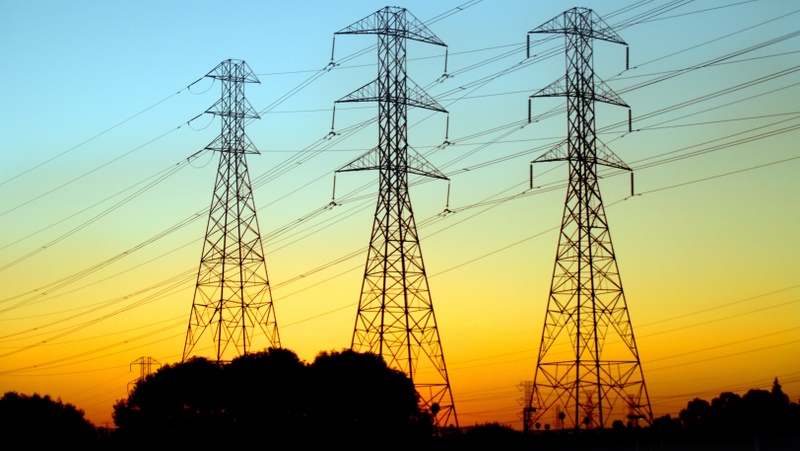
NESI: Group Calls For State Of Emergency As TCN Explains Grid Challenges
By SUNDAY ABBA, Abuja
Consumer Group under the aegis of Nigeria Consumer Protection Network (NCPN) has appealed to President
Bola Ahmed Tinubu to, as a matter of urgency and national importance, declare a state of emergency in the Nigerian Electricity Supply Industry (NESI) for failing to meet the privatisation expectations of improved, quality, and stable electricity supply.
This is coming after the national power grid failed for three consecutive times within a period of one week, causing outages in parts of the country.
The latest was the one of early Monday morning which, according to the Transmission Company of Nigeria (TCN), was as a result of tripping of 330kV Ugwaji–Apir transmission lines 1 and 2, has thrown about 11 states in the North East, North West, and parts of North Central into darkness.
In a statement made available to SUMMIT POST, NCPC President, Kunle Kola Olubiyo, described the industry’s performance since November 2013 when its upstream and downstream sub-sectors were privatised for improved and effective service delivery as disappointing.
According to the group, the call for review of the power sector privatisation became imperative due to the monumental failure recorded in the past ten years that the deal has spanned.
Attributing the recurring system failures and the attendant power outages being experienced in parts of the country in recent times mainly to poor governance and infrastructure deficit among others, Olubiyo described the situation as “a global embarrassment”.
The statement noted with dismay that the power sector was privatised in the year 2013 with embedded design for mid term Review in 2018 and review of the 10 years moratorium in 2013, but they we’re not to be due, among others, to prevailing administrative lapses.
Meanwhile, TCN, in a statement signed and issued Tuesday morning by its General Manager (GM), Public Affairs, Ndidi Mbah, announced that its 330kV Ugwaji–Apir Double Circuit transmission lines1 and 2, tripped due to a fault, resulting in a forced power outage affecting the North East, North West and parts of North Central.
“At approximately 4:53am, the Ugwuaji–Markurdi 330kV Line 2 tripped and 243 megawatts (MW) on that line was transferred to line 1 on the same route. At 4:58am, Line 1 also tripped, resulting in a total loss of 468 MW. By around 5:15am and 5:17am lines 1 and 2 were tried, but they all tripped immediately on the same relay indication,” TCN explained.
According to the company, two teams of linesmen, one from the Apir Transmission sub-region and another from the Enugu transmission, that were deployed to expedite fault tracing along the 215 km route, with a view to restoring the lines promptly, were continuing their search as at Tuesday morning after all efforts to locate the fault spot on Monday failed due to some extraneous factors.
However, and on a positive note, TCN said it has restored supply to the 132kV transmission line from New Haven to Apir even as the 330kV lines remain out of service, but regretted that the Shiroro-Mando transmission line is also down due to security reasons, impacting power supply in the Northern region.
Apologising to the government and electricity consumers in the affected states over the disturbing situation, TCN assured that with the frantic efforts being made by its engineers to trace and fix the fault bulk power supply to both lines would resume as soon as possible.
During an interview on Channels TV’s Sunday Politics earlier, Managing Director and Chief Executive Officer (MD/CEO) of TCN, Sule Abdulaziz, had cautioned that TCN should not be held solely responsible for the frequent national grid collapse in the country.
According to Abdulaziz, grid collapse could be caused by multiple factors, encompassing issues with generation, transmission, and distribution systems.
“TCN is in charge of the grid but if there’s a system collapse, it doesn’t mean that all the problems are from TCN,” he said.
Acknowledging that the recent incidents were grid disturbances that happened two times, the TCN boss lamented that most times they are reported as grid collapse which they’re not, adding that the present situation is an improvement from what it used to be in recent years.