
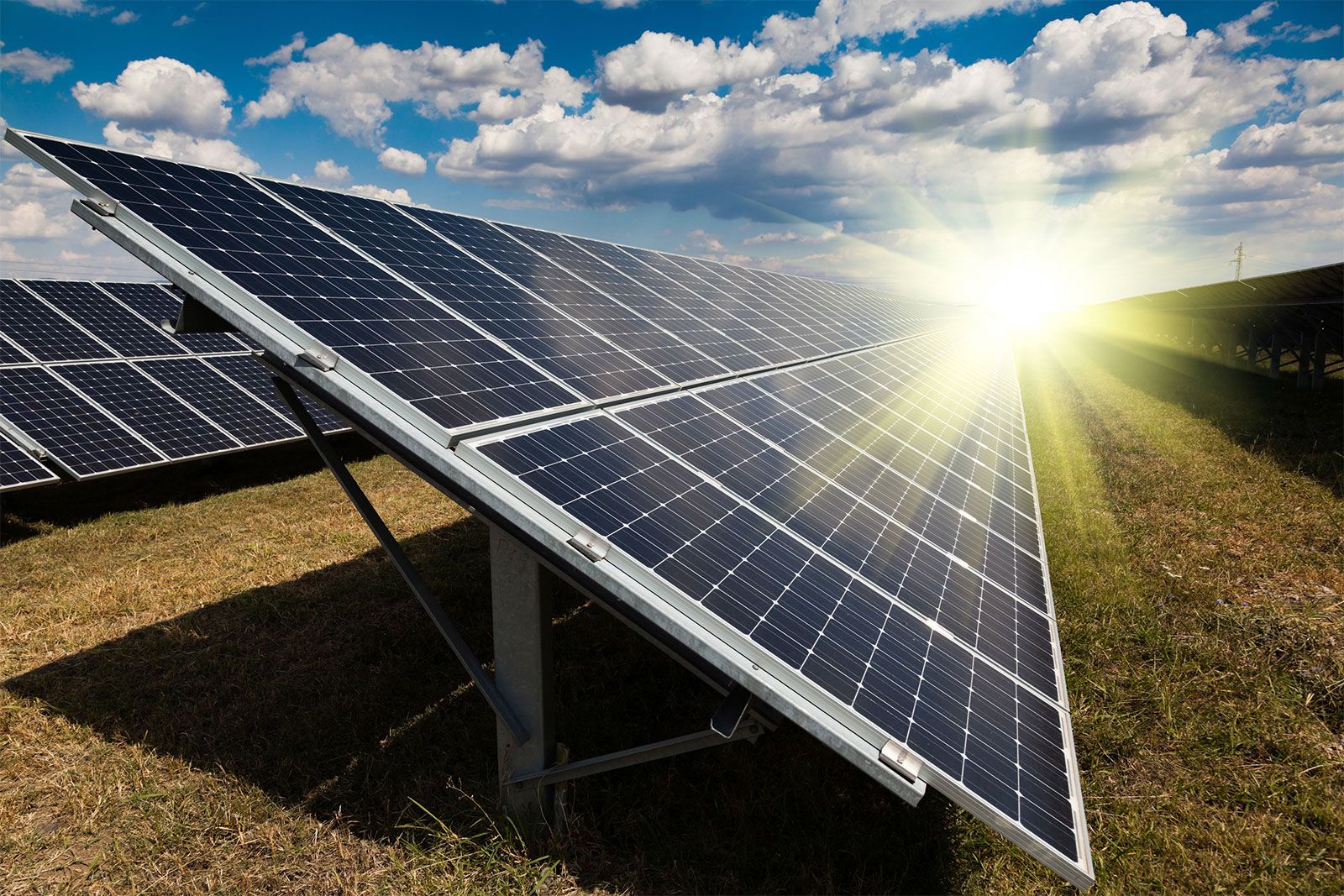
Nigeria brought in solar panels valued at N237.3 billion in the final quarter of 2024, according to data from the National Bureau of Statistics.
The report revealed that most of these panels, described as “photovoltaic cells not assembled in modules or made up into panels,” came from China, accounting for N228.9 billion of the total imports.
This comes despite ongoing efforts to boost local production of solar panels through major investments in renewable energy.
In 2023, former Vice President Yemi Osinbajo laid the foundation for a solar panel manufacturing plant under the National Agency for Science and Engineering Infrastructure (NASENI) in Gora, Nasarawa State.
The project was expected to strengthen Nigeria’s position in the use of alternative energy sources.
The factory, with a budget of $325.86 million, was described by the former NASENI Executive Vice Chairman, Prof. Mohammad Sani Haruna, as a project that would lower the cost of solar energy.
He stated that the plant was part of an agreement between NASENI and the China Great Wall Industry Corporation. Once fully operational, it was expected to reduce the price of solar power, making it more accessible to Nigerians.
During the foundation-laying ceremony, Osinbajo explained that the project was meant to position Nigeria among countries advancing climate-friendly energy solutions.
He also mentioned that solar cells play a key role in solar power systems, as they determine how effectively panels collect and store energy from the sun.
He added that the federal government was working to ensure NASENI received its legally allocated one percent of the federation account annually.
Meanwhile, Nigeria exported electricity worth N75.6 billion to neighboring countries within the same period.
Togo was the largest buyer, receiving electricity valued at N33.7 billion, followed by Benin with N27.6 billion and Niger Republic with N14.2 billion.