
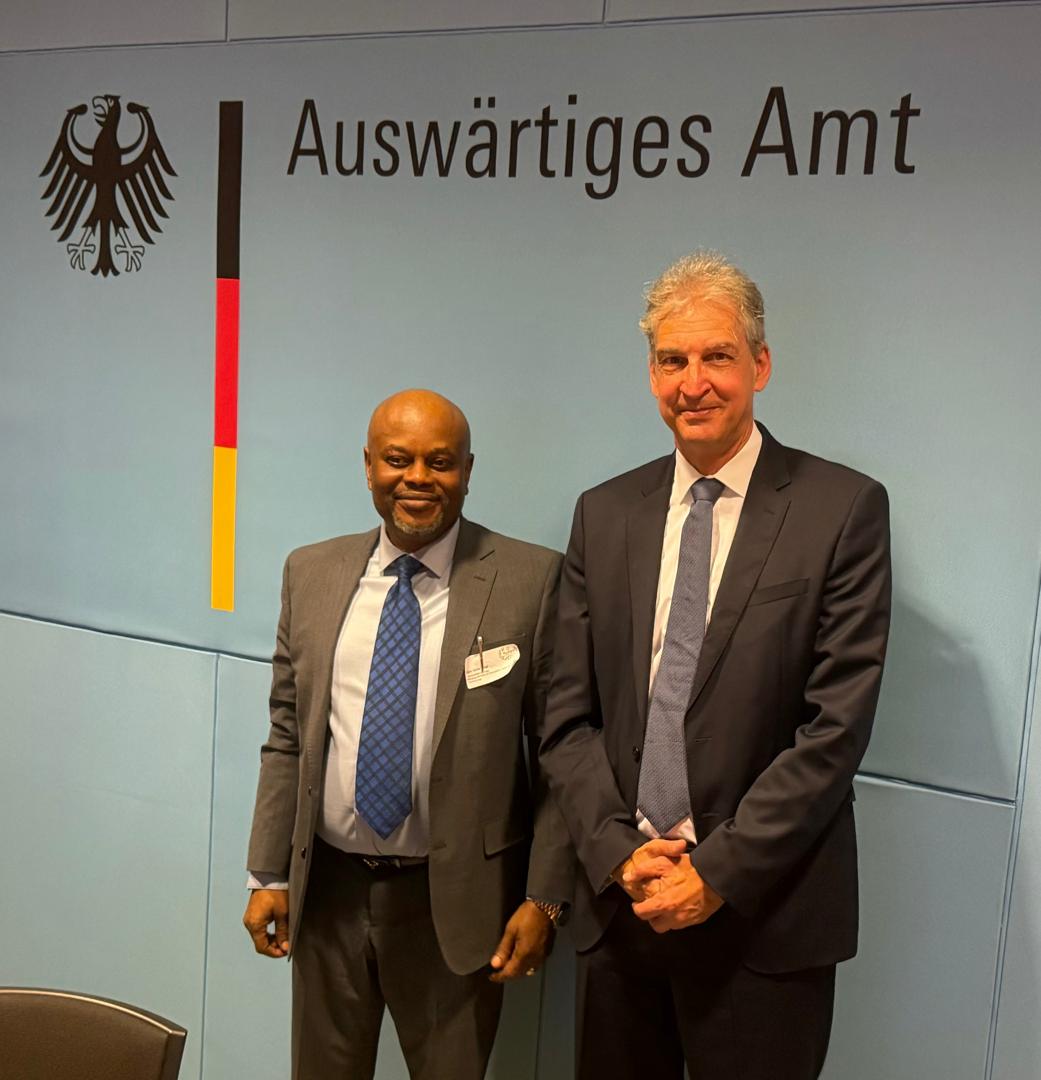
Nigeria’s government on Tuesday, said that it will benefit from Germany’s ambitious €4 billion investment in green energy projects across Africa by 2030.
The Minister of Innovation, Science and Technology, Chief Uche Nnaji, disclosed this at the event and shared the insights following the German Federal Foreign Office H2 Diplo Study Tour, emphasized the strategic importance of this collaboration.
The government also noted that Green hydrogen, often likened to the oil and gas of the future, presents vast economic opportunities.
The minister revealed that the discussions involved key representatives from German ministries, including the Federal Ministry of Research and Education and the Federal Ministry for Economic Cooperation and Development.
Nnaji said: “Nigeria is making a bold move in its energy transformation by positioning itself to benefit from Germany’s €4 billion commitment to green energy projects across Africa by 2030.
“This initiative is fully aligned with President Bola Ahmed Tinubu’s Renewed Hope Agenda, which emphasizes economic diversification, job creation, and sustainable development key pillars
of his 8-point plan to revitalize Nigeria’s economy.”
Also Read:
MTN Calls for Tariff Adjustments to Reflect Economic Realities
In a statement by the Director of Media and Corporate Communications at the National Space Research and Development Agency, Dr Felix Ale, noted that the engagement with Germany was built on fruit discussions between the president and the Chancellor of Germany.
He added, “Our engagement with Germany builds on the fruitful discussions between President Tinubu and Chancellor Olaf Scholz, which resulted in a landmark €500 million renewable energy and gas deal.
“These stakeholders are pivotal in advancing the green hydrogen initiative, a clean and renewable resource poised to decarbonize industries and enhance energy security in Nigeria.”
He revealed that Germany plans to import green hydrogen from Nigeria as part of its efforts to achieve carbon neutrality by 2045. “As Germany aims for carbon neutrality by 2045, it plans to import green hydrogen from partners like Nigeria, underscoring the strategic significance of this collaboration.
“This partnership not only supports President Tinubu’s goals of innovation and industrial growth but also positions Nigeria as a leader in the global green hydrogen market.”
Nnaji highlighted that Nigeria aims to attract substantial foreign direct investments, generate employment, and expand its energy export capabilities.